
.svg)
Insights that matter
BLOG

Every school has its "rockstar" students - the ones who attend every Model United Nations conference, sustainability initiative, or leadership programme.
But for every one of those students, five or ten others remain disengaged.
This raises a question educators everywhere wrestle with:
How do we get more students to care?
After all, unless we narrow the gap between the ‘rockstars’ and everyone else, can we really claim to be preparing young people to engage positively with the world around them?
A recent collaboration in Hong Kong offers some interesting insights.
A collaboration around stories that matter
The project brought together Sprouts Foundation, which creates enrichment opportunities for students from local Hong Kong schools, and Plastic Free Seas, an NGO that empowers young people to take action against plastic pollution.
Takeaway Takes Away Our Life, a film made by student storytellers from Sprouts Foundation, Hong Kong
Through Docathon, students created short documentary films exploring plastic waste in their communities.
For many of the students, this was their first experience with filmmaking. They had never interviewed strangers, edited a video, or researched an environmental issue in depth. Many were also building confidence communicating in English.
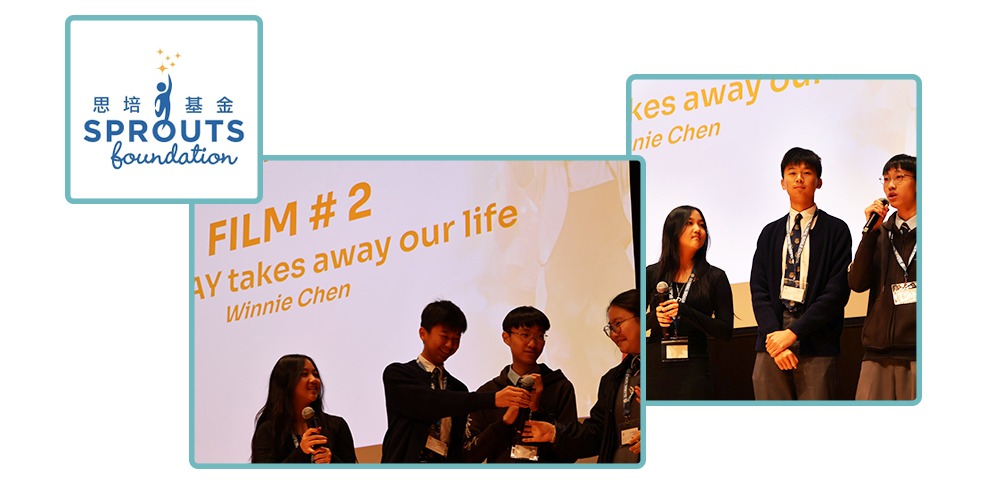
This setting created an ideal opportunity to explore how storytelling might change the way students engage with real-world issues.
Investigating real-world issues brings learning to life
Dana from Plastic Free Seas, who has delivered environmental workshops in dozens of Hong Kong schools, noticed a key difference in this programme.
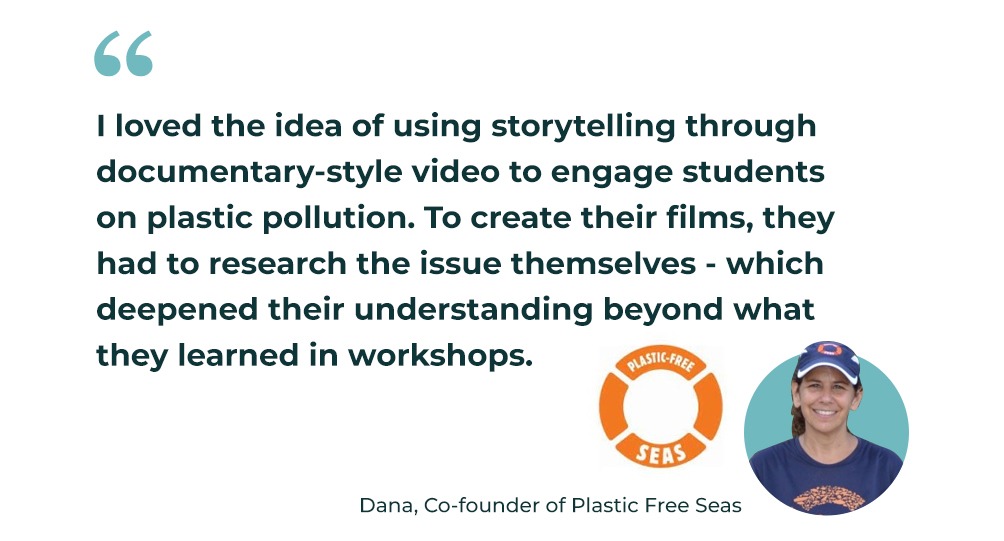
Instead of simply learning about plastic pollution, students investigated it firsthand - interviewing people in their communities and exploring how the issue affects everyday life.
Exploring different perspectives encourages reflection
Winnie, one of the student filmmakers, described how interviewing people in the community changed the way she saw the issue:
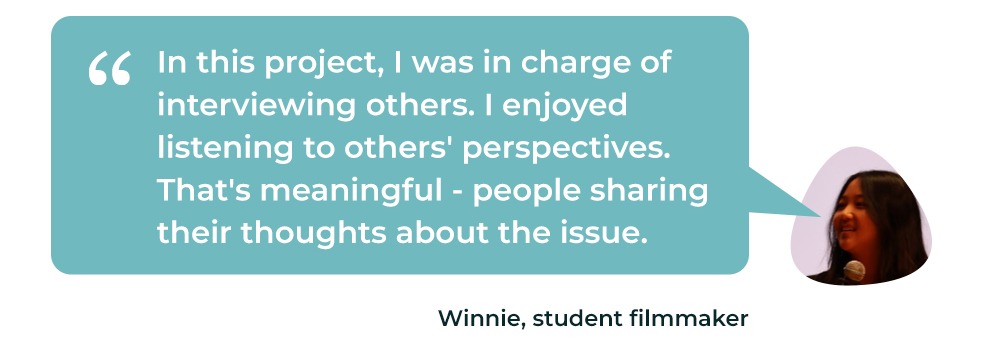
Through this process, Winnie moved from seeing the project as just another classroom assignment to reflecting on her own behaviour in relation to the issue.
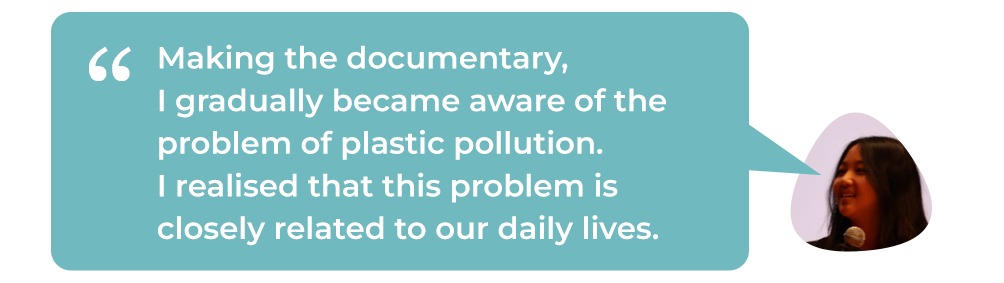
By investigating the issue themselves, students began to connect with it - and that connection sparked something important: they started to care.
Sharing their film with an authentic audience is highly motivating
Students then had the opportunity to share their story at the Hong Kong Docathon, hosted by the Canadian International School of Hong Kong during its annual SDG Summit.
As students developed their films, they began to feel responsible for telling the story well.
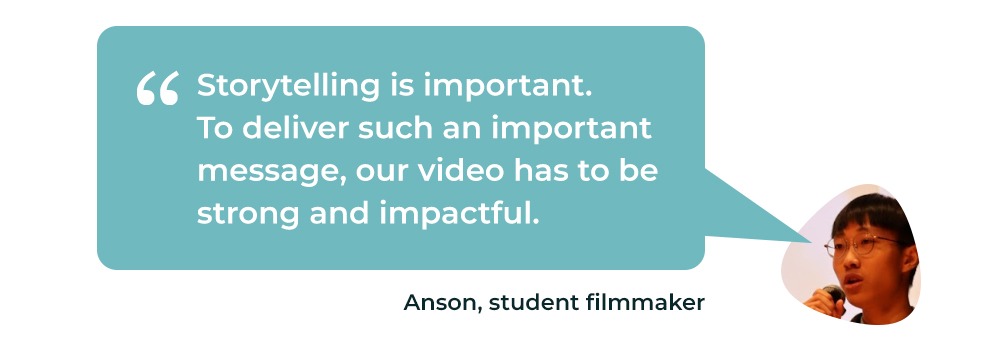
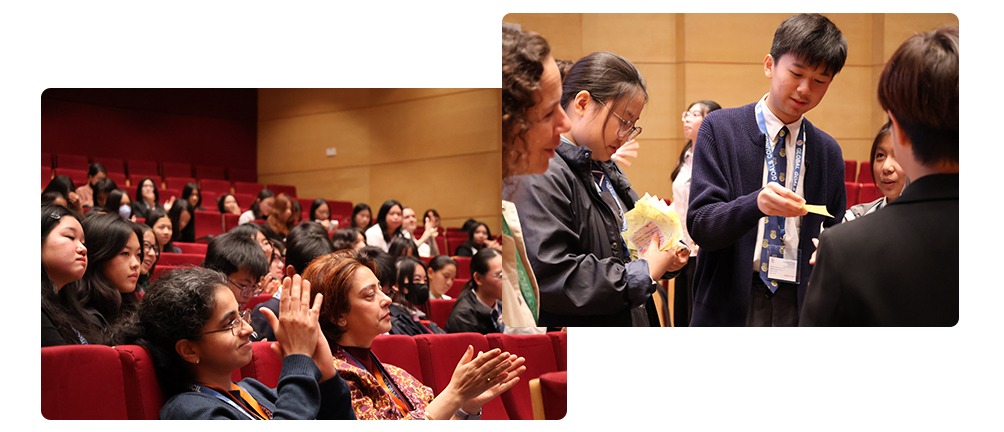
On 7 March, the students presented their films to an audience of over 150 students and educators from around 10 schools across Hong Kong. They introduced their documentaries, answered questions on stage, and discussed the issues their films explored.
The students went from being merely curious to having a genuine sense of responsibility for the issues they explored.
Final thoughts
When students become storytellers, they begin to care more deeply - not just the so-called “rockstars,” but everyone involved in the telling of that story. That’s why purposeful storytelling really is the single most important superpower we have to change the world.

Tom Graham
March 25, 2026

You know how we hear “Student Led” quite a lot these days?
I’ve been pondering this, because it seems to hold some inherent tensions. Quite a few, if I’m to be honest. It might boil down to a simple fact: that schools are adult-designed (and directed) institutions trying to simulate student autonomy.
One of the tensions lies in how much structure is given. Too much structure might not feel very student-led. Too little structure might lead to confusion, inequity, surface-level work and even stress for the students.
Another tension that comes to me is this: “Student-led” might unintentionally favour certain learners. Confident, articulate, organized students tend to thrive while students who need more support may struggle with open-ended autonomy. Is this okay? Do we give these confident, articulate students a chance to really shine and that’s what leadership means? Are all types of students included in building leadership skills? I don’t have the answer…it’s just something I’ve been thinking about.
What got me thinking about this?
Well, it’s the BRIDGE TO IMPACT Changemaker Conference that’s happening at IS Düsseldorf, March 5-7. It’s the fourth Changemaker’s conference that Make A Difference Courses will be involved with, featuring Docathon - students telling purposeful stories from their local communities and sharing them with the world via 3-6 minute documentary films.
Here’s what went down at the 2025 Changemakers Conference in Budapest:
A sneak peek into what went down at Docathon Global held in American International School of Budapest (AISB), 2025
It’s a student-led conference, and each year I am amazed at how the delicate balance of structure and guidance is navigated, and how students with a variety of personalities and skillsets all can shine. I have learned a lot from working with both the adults who are involved and the students that are leading: there is not always an obvious path, where everybody knows exactly their role and their course of action, BUT, what is super clear to me is that students get a chance to PRACTICE leadership, in a structured environment. I think that’s critical if we want to grow leadership in our student body.
Here are some examples of growth in leadership skills within structure that I’ve seen in working with Jonah, a student from IS Krakow, who will be delivering a workshop at the Changemaker’s Conference based on his experience with Docathon.
He’ll be sharing his journey from not even knowing what topic he wanted to focus on, to his “AHA” moment, and then the realisation that stories are all around us, waiting to be told. He hopes to inspire other students to look around, see the untold stories, and then to become purposeful storytellers who inspire and motivate others to change the world for the better. Here are some words from this young storyteller and budding leader:
On the process of creating his film, and the workshop itself - and the intentional and ethical use of AI
On self-awareness - not only in cutting his film down to the requisite 3-6 minutes, but in planning the delivery of his workshop at the conference:
On planning and responsibility:
These insights and observations from Jonah give me a clearer picture of how “student led” can truly work for students and be meaningful despite the inherent tensions I talked about before.
I am grateful for the students leading the Changemaker’s Conference at ISD for the opportunities they are taking for themselves to grow in the area of leadership, and also for the opportunities they have created for other students to practice leadership skills.
Here’s what you can expect at the 2026 Changemakers Conference in Düsseldorf, Germany:
BRIDGE TO IMPACT – Changemakers Conference 2026
March 5–7, 2026 | 📍International School of Düsseldorf | Düsseldorf, Germany
And a shoutout to Inspire Citizens’ Sophie Peccaud for offering an ISD training session for student presenters: Leading a Changemaker Workshop. It takes a village, and this village of students and educators leads me to believe that we can overcome the tensions inherent in student leadership to bring meaningful opportunities to grow in leadership skills.

Suji DeHart
February 26, 2026
The Strategic Challenge
Visit the website of most international schools and you’ll see familiar phrases: holistic education, global citizenship, community engagement. It's easy to include phrases like this in mission statements, but bringing those concepts into reality for a school and having global citizenship or community engagement become a real part of a student's experience is a much bigger challenge.
Genuine values were already at the core of IS Ulaanbataar's strong programmes. We focused on strengthening how those values were expressed and experienced — by families, faculty, and community partners — through student learning itself.
At ISU, I wear two hats — one in service learning and the other in admissions, marketing and community experience — roles that are typically treated as separate.
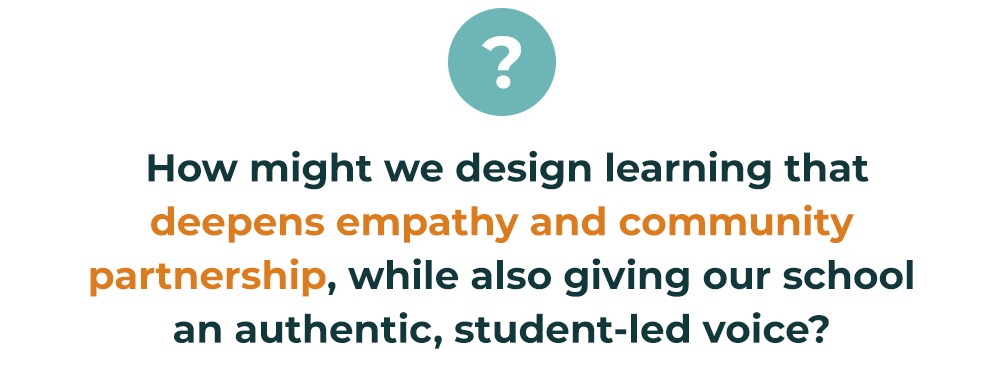
When I first encountered Docathon, it prompted us to ask a simple but important question that could help bring these two worlds together:
Our Context at IS Ulaanbaatar
Community engagement sits at the heart of our IB Action and Community Outreach programmes. Students regularly partner with local organisations, including long-standing work with the Dolma Ling Community Centre and its Soup Kitchen project.
From the outset, we were clear about one thing: we wanted to help students slow down and engage more thoughtfully with the people and situations they encountered.
That desire to deepen reflection is what led us to integrate Docathon.
The Intervention: Docathon × Service Learning
Rather than adding filmmaking as an extra activity, documentary storytelling was embedded directly into service learning.
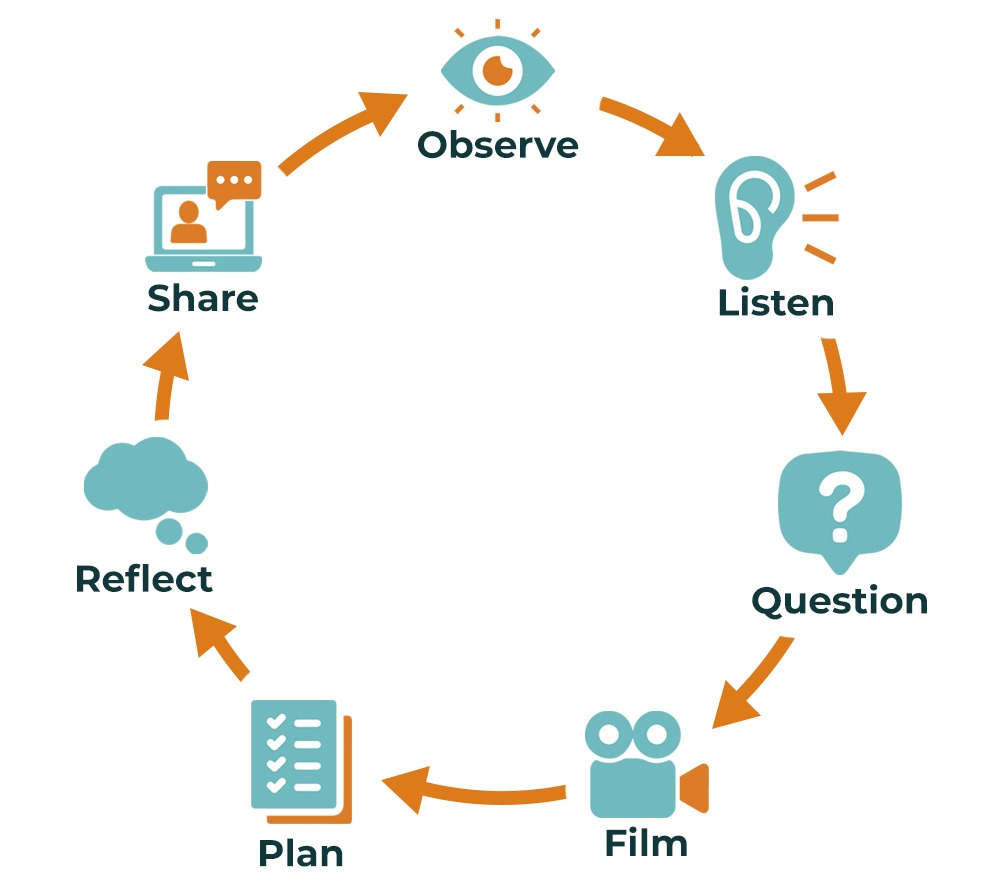
The impact was immediate. Conversations shifted from what students were doing to what they were learning — and to the people they were working with.
Importantly, this wasn’t about producing promotional content. The focus was on ethical representation, empathy, and narrative purpose — telling stories responsibly and with respect for our community partners.
Here are some of the changes I observed at our school:
Deeper Student Learning
Students were required to investigate, to pay attention and to reflect while turning their stories into short films - they could not remain passive. They had to decide what mattered, confront assumptions, and explain why their story was important. As teachers, we observed stronger listening skills, deeper questioning, and greater confidence in how students articulated their learning.
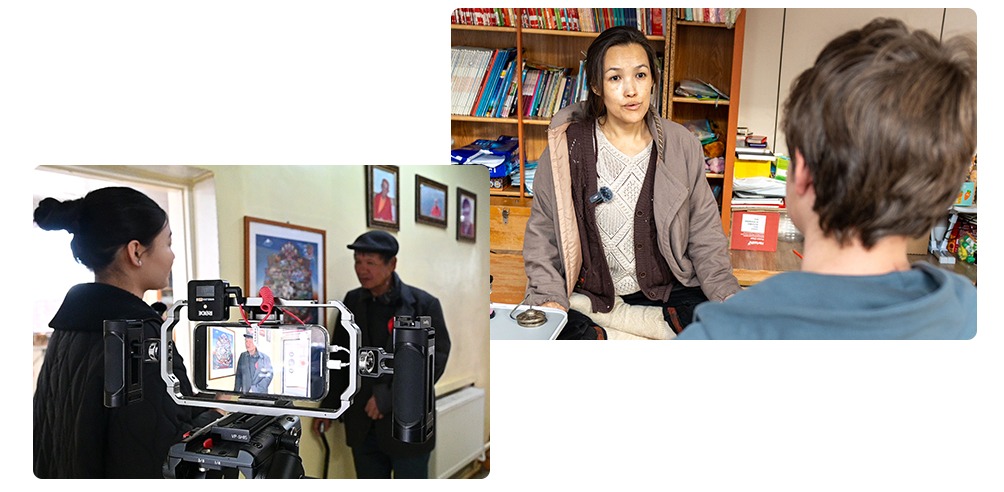
Students behind the scenes holding interviews with community members from the soup kitchen and community classroom
As one student, Victor, explains: “Instead of coming just to make a film to help, I realised we were also there to listen to the community. Filming forced us to slow down a bit, ask better questions, and truly understand what matters to them.”
Stronger Community Partnerships
The process reframed relationships with partners such as Dolma Ling. What began as a mindset of “us helping them” shifted toward a deeper understanding of why partners do what they do, and how to represent that work honestly. As one student, Bilguunzaya, reflected, “Being there gave me a perspective on the world that I don’t usually get. It really broadened how I see people and situations.”
As a result, the films became student-led reflections that community organisations could genuinely stand behind: Dolma Ling has used them to raise funds and increase awareness, while ISU has used them as evidence of authentic learning.
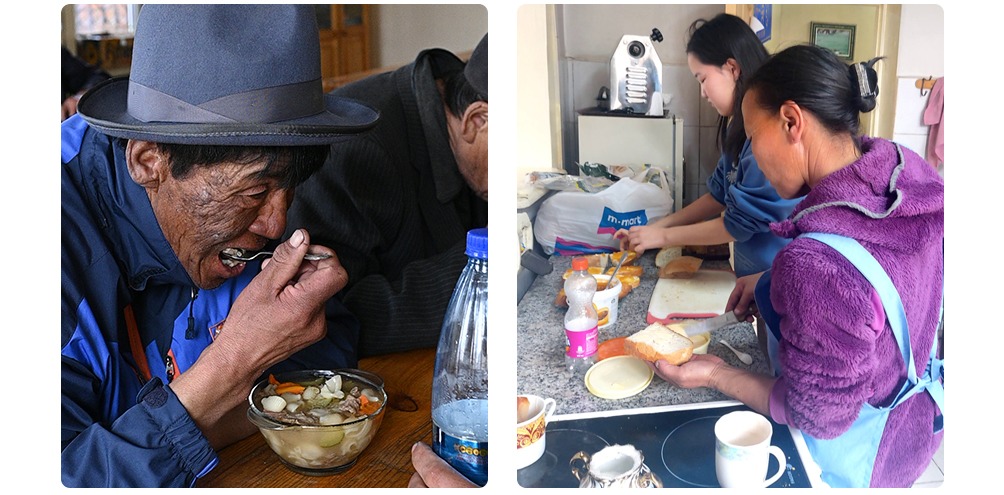
The Dolma Ling Soup Kitchen in operation
Authentic School Narratives
Because the work was student-created and grounded in real relationships, the documentaries became powerful narrative artefacts for the school — without feeling like marketing. The perspective, voice, and meaning of the stories came from the students themselves.
ISU student Khuslen explains: “As a group, we talked a lot about what local impact looks like and how a small community organization fits into larger conversations. That process opened my eyes to how many ways a story can be delivered to the world”
Watch one of the films made about Dolma Ling, by ISU students:
This experience reinforced three key insights:
Service learning only transforms when reflection is intentional.
If students aren’t helped to pause and make sense of their experiences, the opportunity for deeper learning is missed. Reflection doesn’t just “happen” — it has to be built in, and Docathon provides a powerful way to do this.
Student storytelling creates authentic evidence of learning and values.
Student-created stories show growth, understanding, and purpose far more clearly than slogans or marketing messages ever could.
When learning is genuinely meaningful, the story takes care of itself.
When learning is real, communication follows naturally. The most credible voices are the students themselves.
Ultimately, the most powerful outcome was not the films themselves, but the shift in how students understood their place in the world. Through sustained engagement and honest storytelling, service learning moved beyond charity toward responsibility, empathy, and systems awareness. As Saranzaya, a student involved in the partnership, reflected, “It’s not their problem. It’s all of our responsibility — because it could have been any of us.”
When schools create the conditions for students to connect deeply with their communities and represent those stories with care, slogans give way to stories that are grounded, credible, and capable of lasting impact.
Ultimately, this comes down to leadership and strategy, not marketing.
When schools make that choice deliberately, the experiences themselves become the story.

Mark Cowlin
January 20, 2026
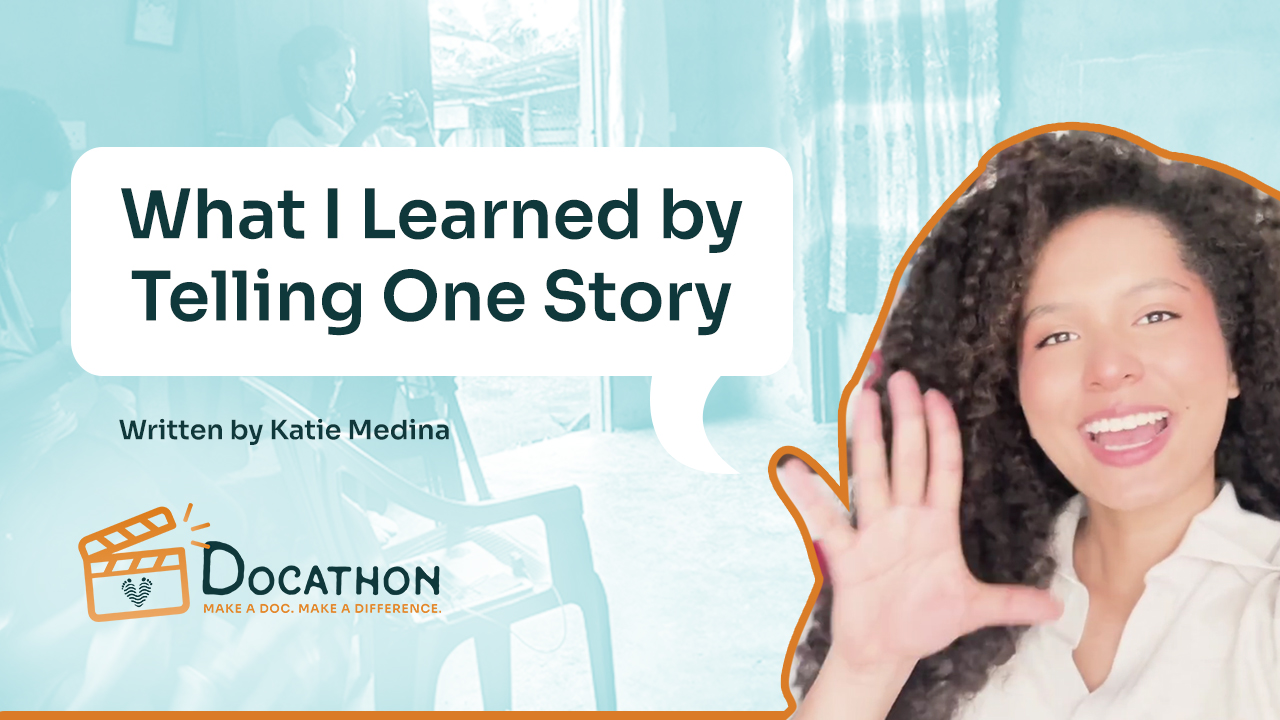
A guest blog post by Katie, student at the International School of Tanganyika, Tanzania
Stories have been part of human life since the beginning of time. Today, more than ever, we interact with them daily through the posts and videos we scroll past for hours each day. Yet we rarely stop to ask, why? Why do stories matter?
Most of us recognize it for its entertainment purpose. However, what we often miss is its underlying power that lies in how they make us feel, think, and understand others. If so much of our time is spent scrolling, consuming them - what might change if we paused to tell stories with intention?
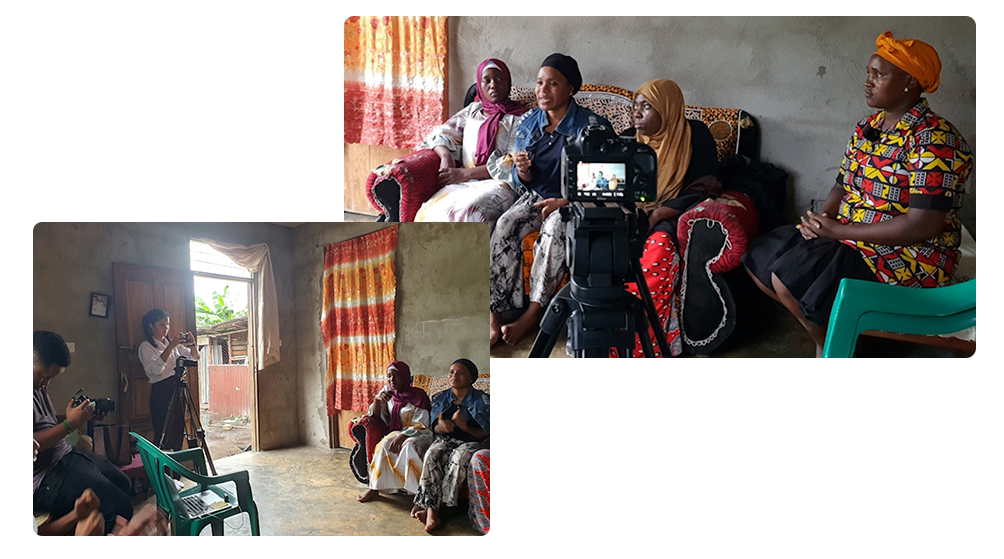
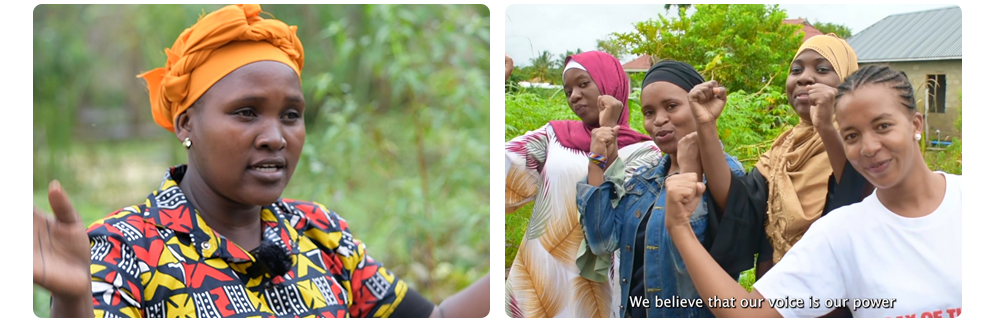
I have lived in Tanzania for years, knowing very little about the community that I lived in. When I first encountered Docathon, I wasn’t sure what to expect. I knew I wanted to tell a story about gender inequality in Tanzania, but I did not know where to begin. I realized to begin that journey, I had to step into someone else’s world and create a story that carries authenticity, and courage. Docathon became the platform to show me how. From that single story, my goal as an artist and my reason for telling stories have been reshaped.
Here are some of my key takeaways from my Docathon experience.
I thought I understood gender inequality in Tanzania, but listening to Leonadina’s lived experience transformed it from an issue into a human reality. Although that listening was not always comfortable, that discomfort became part of my responsibility as a storyteller to honour her truth with care and integrity. After the interview, I felt unsettled but inspired.
When stories are grounded in lived experience, audiences see not a political point, but a human reality. The most powerful stories are told with authenticity and courage; stories that share fears, truths, and the process of overcoming challenges. It is this emotional connection that engages people, moves them, and often motivates meaningful action.
Any story told with the right technique or tone can be powerful, but purposeful storytelling requires us to reach into our most honest selves and let lived experience guide the work.
For me, this became real in the editing process. I returned home with hours of footage and had to shape a woman’s life, struggles, and strength into a six-minute film. Purposeful storytelling meant deciding what to leave out as much as what to include- knowing each cut would shape how her story was understood.
So as a purposeful storyteller, every creative choice we make- how we structure a plot, shape a storyline, or present our story to others- requires introspection, thought, and emotional courage. These decisions determine whether a story simply exists on a screen or reaches beyond it and says, Listen. This matters.
Watch Katie’s video on how she drew meaning from telling a story.
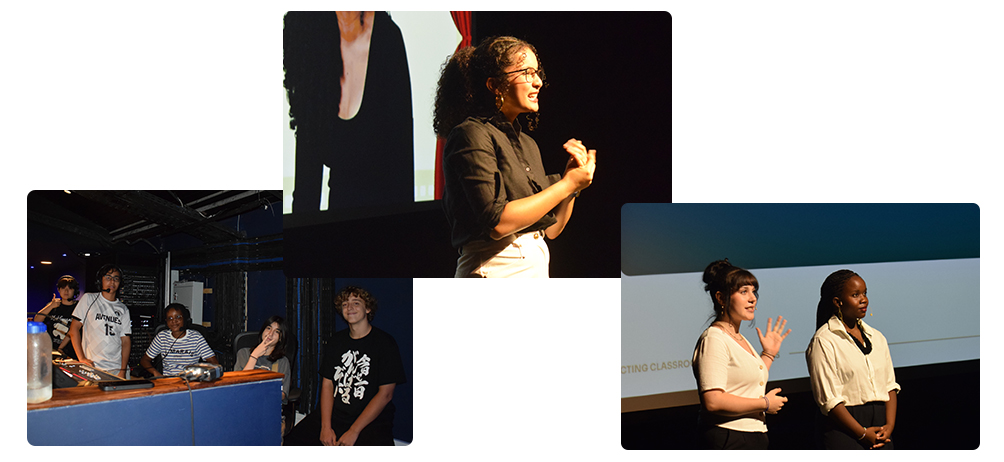
After submitting my film, I watched the Docathon screening in Kenya from my home in Tanzania. Since then, my film has been shown as far away as Monaco and the Philippines, and I have gone on to organise a Docathon after-school club and run a Docathon East Africa film festival, bringing together purposeful storytellers from across the world!
My film was shared with students, educators, and communities around the world, sparking conversations around the world on female empowerment.
I was only 17, and I never knew I was capable of telling stories that could make such a difference.This was when I realised that my art intersects with advocacy, and that my voice could make a difference.
Through Docathon, storytelling is not just a tool for creativity. It is a tool for action.
Final thoughts:
When us students are engaged to tell our stories, we begin to see ourselves not just as learners, but as contributors. In my case, I gained confidence, agency, and a sense of responsibility to respond to the world around me with imagination and curiosity.
So here are some questions worth considering:
- What happens when learning goes beyond assignments and asks students to take responsibility?
- Are students working for grades, or for something that matters to them?
- How do we treat student voice: as something to control, or something to amplify?
I believe that when we empower youth to tell meaningful stories, we are not only teaching them to communicate. We are teaching them to imagine, empathise, and lead- and to create a more connected and compassionate world.
Katie Medina
January 15, 2026
A few weeks ago, my downstairs neighbour started playing very loud drum and bass music.
Not just loud — the kind that reverberates through the walls and makes it impossible to think.
Almost instantly, a stream of stories formed in my head:
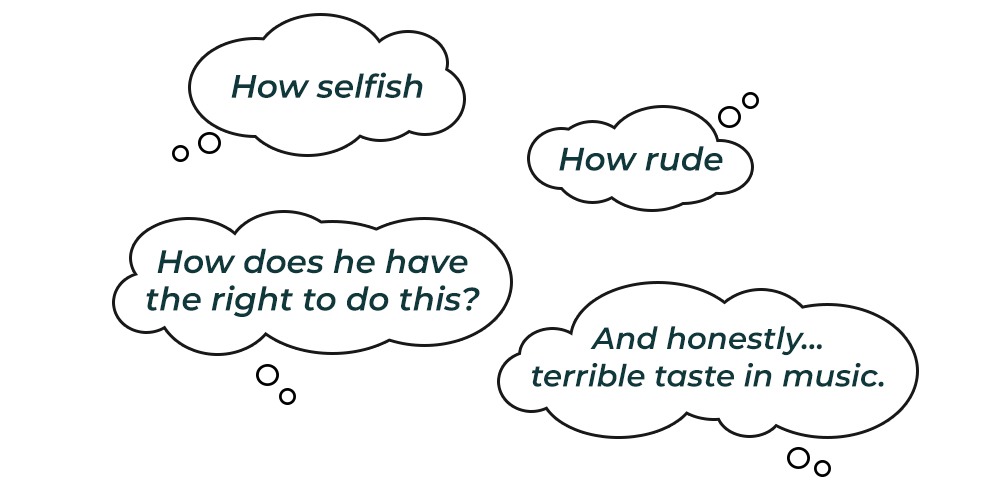
In the past, I would have done what I usually do in situations like this: suffer in silence, feel quietly annoyed, and hope it wouldn’t happen again.
This time, though, I finally drummed up the courage to knock on his door.
What I didn’t expect
His response completely disarmed me.
He was genuinely apologetic. The music, he explained, was part of a live BBC DJ broadcast he’d been invited to perform in — a rare and exciting opportunity for him. He promised it wouldn’t happen again and said he was truly sorry. He hadn’t realised how thin the walls were.
I walked back upstairs feeling something unexpected.
Yes, my point was still valid — a warning would have been considerate.
But I also felt warmer towards him. Not because the noise was justified, but because I now understood it. His excitement, his focus, his lack of awareness — it all made sense once I stepped outside my own assumptions.
From neighbours to the world
That small interaction stayed with me, because it mirrors how we often engage with global issues.
So much of the time, we lead with judgement rather than curiosity. We construct stories from a distance, filtered through our own experiences, beliefs, and increasingly, through algorithms that reinforce what we already think.
It’s easier to consume perspectives that feel familiar than to pause and ask:
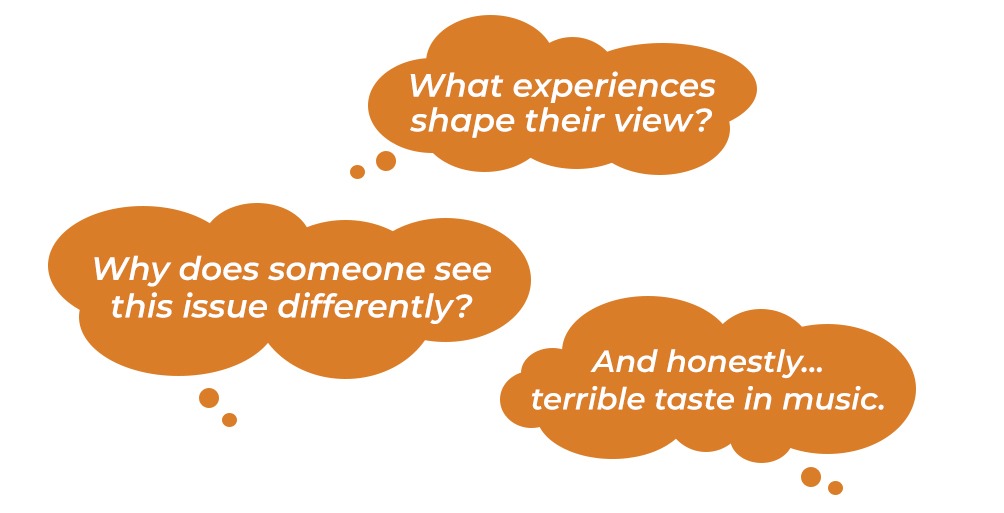
Why storytelling matters
This is exactly why storytelling — especially around global and social issues — is so powerful.
Making a film forces us to slow down and understand perspectives locally.
What do people on our doorstep think about an issue? Why don’t they all think or act like we do? What contexts, pressures, and hopes shape their choices?
Sharing a film then expands that understanding outward. When stories travel, we begin to see that perspectives aren’t just “right” or “wrong” — they are shaped by place, culture, history, and lived experience. And in reality, the number of valid perspectives on any issue is almost endless.
We’ll never master all of them. In fact, we won’t even get close.
But we can develop the habit of curiosity.
And curiosity, over time, leads to greater understanding — and often, greater kindness.
Just like it did with my neighbour.
A new opportunity: Global Perspectives Leader Credential
This belief sits at the heart of why we’re teaming up with RMIT University’s Media Program to launch the Global Perspectives Leader Credential.
The credential is grounded in the idea that creative digital storytelling can help us make sense of real human interactions across cultures — an area of deep interest for media practitioner and scholar Dr. Hannah Brasier, whose work explores the creative potential of digital media technologies to understand how people experience and interpret the world.
The opportunity for students
Here’s how it works:
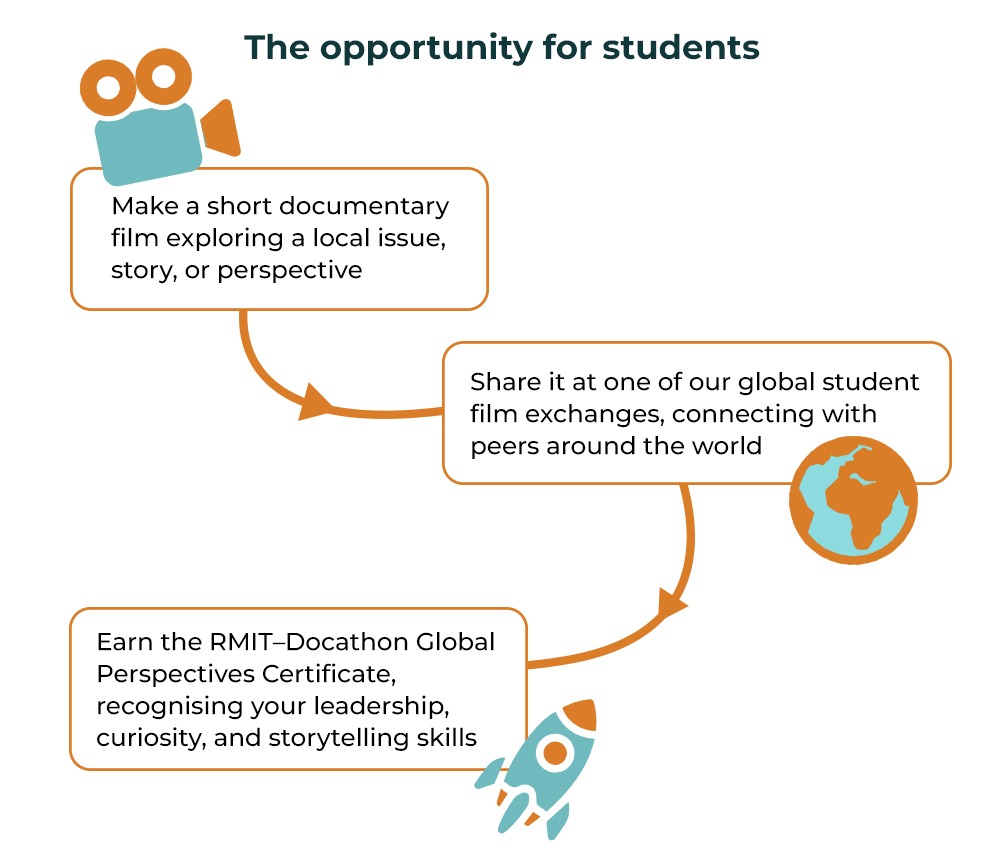
- Make a short documentary film exploring a local issue, story, or perspective
- Share it at one of our global student film exchanges, connecting with peers around the world
- Earn the RMIT–Docathon Global Perspectives Certificate, recognising your leadership, curiosity, and storytelling skills
This isn’t about having all the answers.
It’s about learning to ask better questions — and listening more deeply to the answers.
Click here to see upcoming Docathon dates and join a Global Perspectives exchange
Tom Graham
December 23, 2025

Preparing students for the complexities of the future is key; in schools, there exists a critical yet often overlooked aspect – the pursuit of purpose. The millennial generation, now a driving force in the workforce, is known for valuing purpose over profit, willing to sacrifice higher pay for a career that aligns with their values. Are we adequately preparing our students for this pursuit of purpose? Do we address it in our curriculum?
The Millennial Quest for Purpose
It is widely accepted that millennials seek more than just a paycheck from their careers; they crave a sense of purpose and a connection to something greater than themselves. As educators, it is crucial to recognize this shift in values and equip students with the tools they need to navigate their journey towards purpose and fulfillment.

The Missing Piece in the Curriculum Puzzle
Despite the evident importance of purpose in shaping the lives and careers of our students, it is disconcerting to note this is often absent from the curriculum.

Why It Matters
Purpose-driven individuals are more likely to be motivated, resilient, and fulfilled in their careers. By incorporating purpose into the curriculum, we not only prepare students for the workforce but also empower them to lead more meaningful lives, especially in this age of eco-anxiety and general upheaval.
Our “MAD” approach to purpose
We, at MAD, encourage students to find purpose via the concept of "Ikigai" – a Japanese term referring to the intersection of what one loves, what one is good at, what the world needs, and what one can be paid for. It literally means “a reason for being.

MAD Courses has recently crafted and launched a microlearning course about Ikigai in partnership with Deloitte to empower an initial 10,000 students and teachers to reflect on purpose. But this got us wondering:
Is purpose really inclusive? Can anyone focus on their Ikigai? What about those young people who are in lower income brackets?
We may be reluctant to talk about Ikigai with students whose economic situations are not optimal, thinking: How can we ask them to “follow their passions” or “just do what you’re good at” while they may need to focus on gainful employment in order to support themselves and/or their families.
Financial constraints may limit immediate choices, but exploring Ikigai can be transformative. Understanding Ikigai helps students to identify interests and skills and empowers them to pursue holistic fulfillment, contributing to well-being and long-term success. Loving what they do increases the likelihood of long-term success, enhancing their overall financial situation.
We recently launched the course at Foundation University in the Philippines, and gathered the insights of the first 81 students to take this course:

A huge thank you to Foundation University for having us on their campus, and to Deloitte for collaborating with us to make this course happen, as part of their global #worldclass campaign.

We're hoping it sparks more conversations and reflections around one of the most important (and yet under-valued) careers-related questions we ever get to ask ourselves!
If you are interested in exploring your Ikigai, email us at suji@madcourses.com to apply for this course.
