.svg)
how does docathon fit within your school?
Curriculum Integration
Activities Week and / or Service Trips
After-School Activities / Clubs
Docathon
MAke a doc. make a difference
How it works
- A beginner-friendly filmmaking course (no prior experience needed)
- Mentorship from professional storytellers and filmmakers
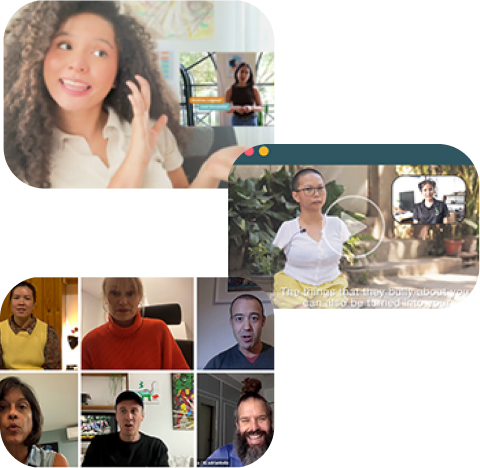
- Live in-person screenings (selected films only*)
- Online Student Film Exchanges, connecting students across countries.
.png)
- Schools can host a Docathon event and invite local schools
- Standout students can earn leadership credentials (digital certificates) by leading workshops or screenings to inspire others
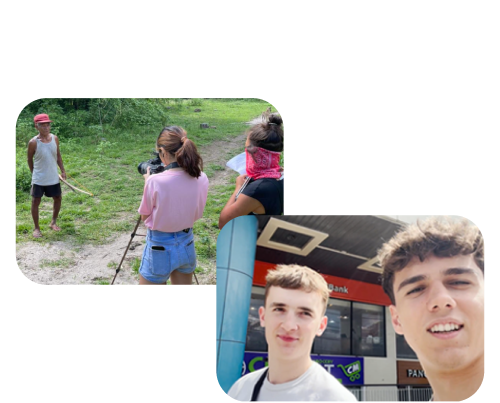
Recognising student leadership & Impact
What Are Credentials?
How to Earn Them
Student Benefits
meet your docathon mentors
Your students are supported in their filmmaking journeys by professional storytellers and filmmakers.
Andrea Legaspi
Docathon's Head of Student Experience

Kevin Kasoma
Storyteller and Journalist

Ayen dela Torre
Storyteller and Co-founder of Where To Next

Brock Edwards
Filmmaker
.svg%201.svg)
Teacher's toolkit
%202.png)

Docathon is best suited for ages 13 to 18, the majority of whom are new to filmmaking.
Ages 9 to 12 can also successfully create films with a little additional support from teachers or mentors. If you’re interested in making short documentaries with younger students, please reach out to us to learn more about Junior Docathon.
A typical Docathon follows five simple stages: exploring ideas, planning a story, filming and editing a short documentary, receiving guidance and feedback from professional storytellers, and sharing the film—followed by reflection.
Learn more in the Docathon Discovery Hub
Time commitmentTypical duration: 4–8 weeks
Docathon can also be adapted to:
A few lessons per week, for a few weeks
A condensed project sprint – some schools have completed the journey in just three or four days!
An extended term-long inquiry, such as a semester-long elective course.
Docathon is a project-based learning program where students collaboratively create short documentary films around real-world topics that matter to them and their communities. It combines research, critical thinking, storytelling, and media literacy.
Docathon fits naturally into:
English / Language Arts (narrative, persuasion, research, speaking & listening)
Humanities & Social Sciences (history, civics, geography, ethics)
Media Studies / Arts (visual storytelling, editing, sound, design)
Interdisciplinary or project weeks (cross-curricular skills)
Wellbeing, citizenship, or service learning programs
It’s flexible enough to be:
A standalone unit
Part of an existing inquiry or unit
A short intensive project (e.g. end-of-term, “week without walls” type enrichment week)
Teachers act as facilitators rather than documentary filmmaking experts. The role includes:
Introducing the project
Assisting with students’ topic selection
Arranging contact with local changemakers and organisations
Supporting research, planning, and ethical storytelling
Helping students manage timelines and collaboration
Providing feedback at key checkpoints
Assessing student work using provided rubrics or school criteria
No prior filmmaking experience is required. The focus is on learning outcomes and purposeful storytelling, not technical perfection.
Docathon is designed as an introductory filmmaking experience, so most students take part using equipment they already have. Many Docathon films are made entirely on mobile phones, with guidance provided on free, easy-to-use editing software. If students have access to a small microphone, this can improve audio quality, but it is helpful rather than essential.
Students are guided to choose topics that are ethical, meaningful, and appropriate for their context. Students interpret a Docathon prompt such as “Bridging the Gap”, and can then interpret in their own way, making a film on:Teachers act as facilitators rather than documentary filmmaking experts. The role includes:
Global issues that present locally
Service learning or community partnerships
Sustainability and the SDGs
Identity, wellbeing, or youth voice
Social justice, civic engagement, or cultural stories
