Explore Stories That Matter

Meet the 'Humans of Docathon' - students, educators, and communities telling stories that build empathy and inspire impact.

A world full of Stories

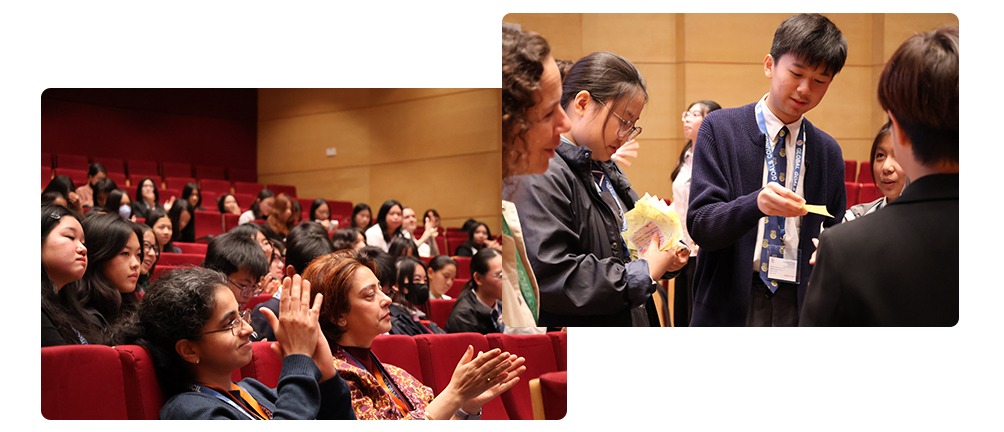
Students and teachers worldwide host Docathons, mentor peers, and inspire their communities through the power of film.

From classrooms in Tanzania to conferences in Monaco, these stories show that impactful change can start anywhere.

Student Spotlight

Student Spotlight

See how students develop confidence, voice, and leadership by telling stories that matter—earning recognised credentials along the way
After taking part in one of the very first Docathons, Katie was inspired to bring a Docathon event to her own school—giving students the opportunity to tell powerful stories about their communities and share them with peers across East Africa and beyond.

✅ Led the planning and delivery of a hosted Docathon event
✅ Ran a Docathon After-School Activity club to support student filmmakers
✅ Earned two leadership credentials.
READ MORE ABOUT KATIE'S STORY

Student Films

Watch  other remarkable Docathon submissions from around the world

BEYOND LIMITATIONS

Original film by Julianne from Foundation University in the Philippines.

A GIRL WITH A DREAM IS ON FIRE

Original film by Katie from International School of Tanganyika in Tanzania.

Light of hope

Original film by Year 5 students from British School Manila in the Philippines.

RAINDROP

Original film by Ana, Eli, Henna, Kalin, and Kiaan from Shanghai Community International School in China.

 Budapest Bike Mafia

A film by CAS student David

Dolma Ling Soup Kitchen

International School of Ulaanbatar,
Kazakhstan

Student Voices

"I got to connect, empathise, laugh and make new friends. Thank you Docathon for the opportunity!" Katie, Tanzania
This is some text inside of a div block.

Heading

This is some text inside of a div block.
"Taking part in Docathon opened my mind and changed my perspective on how I should treat life", Student,
This is some text inside of a div block.

Heading

This is some text inside of a div block.
"At a certain point, making my film became less of a school project, and more of a call to action", Student, British School Manila, Philippines.
This is some text inside of a div block.

Heading

This is some text inside of a div block.
"I used to be shy. Now I’ve told a story that reached three continents.” — Student, Philippines
This is some text inside of a div block.

Heading

This is some text inside of a div block.

school stories

Connecting High School English with the Real World

30 students | Grades 11–12

“Docathon added real purpose to a film study unit. What a great way to use creative communication to support and engage in service learning.”
Dr. Sou Leong-Ellerker, English Teacher, American International School of Johannesburg
Learn More

Bringing Service & Sustainability Week to Life

200+ students | Grades 7–9

“The documentary process makes sure students listen deeply… It puts community voices front and centre.”
Michael Guinness, Service & Sustainability Lead, British School Manila
Learn More

From Classroom to Changemaker

80 students, Grade 10

“Docathon aligned well with our curriculum and gave students a public platform to share and celebrate their work.”
Jay Goodman, Changemaker Teacher, International School Nido de Aguilas, Chile.  
Learn More

A Regional Showcase of Student Stories

10+ European Schools In collaboration with the Changemaker Conference

“Storytelling is one of our greatest community assets and Docathon elevates the stories of local communities to the global stage. “
Dom Verwey, G6–12 Service Learning Coordinator & DP Core Educator, American International School of Budapest
Learn More

Ready to dig deeper into how Docathon can work in your school or classroom?

EXPLORE THE DOCATHON DISCOVERY HUB

MAD Stories

Why storytelling matters—and what students, educators, and the communities behind the stories are teaching us about learning, empathy, and impact.

BLOG

The Strategic Challenge

Visit the website of most international schools and you’ll see familiar phrases: holistic education, global citizenship, community engagement. It's easy to include phrases like this in mission statements, but bringing those concepts into reality for a school and having global citizenship or community engagement become a real part of a student's experience is a much bigger challenge.

Genuine values were already at the core of IS Ulaanbataar's strong programmes. We focused on strengthening how those values were expressed and experienced — by families, faculty, and community partners — through student learning itself.

At ISU, I wear two hats — one in service learning and the other in admissions, marketing and community experience — roles that are typically treated as separate.

When I first encountered Docathon, it prompted us to ask a simple but important question that could help bring these two worlds together:

Our Context at IS Ulaanbaatar

Community engagement sits at the heart of our IB Action and Community Outreach programmes. Students regularly partner with local organisations, including long-standing work with the Dolma Ling Community Centre and its Soup Kitchen project.

From the outset, we were clear about one thing: we wanted to help students slow down and engage more thoughtfully with the people and situations they encountered.

That desire to deepen reflection is what led us to integrate Docathon.

The Intervention: Docathon × Service Learning

Rather than adding filmmaking as an extra activity, documentary storytelling was embedded directly into service learning.

The impact was immediate. Conversations shifted from what students were doing to what they were learning — and to the people they were working with.

Importantly, this wasn’t about producing promotional content. The focus was on ethical representation, empathy, and narrative purpose — telling stories responsibly and with respect for our community partners.

Here are some of the changes I observed at our school:

Deeper Student Learning

Students were required to investigate, to pay attention and to reflect while turning their stories into short films - they could not remain passive.  They had to decide what mattered, confront assumptions, and explain why their story was important. As teachers, we observed stronger listening skills, deeper questioning, and greater confidence in how students articulated their learning.

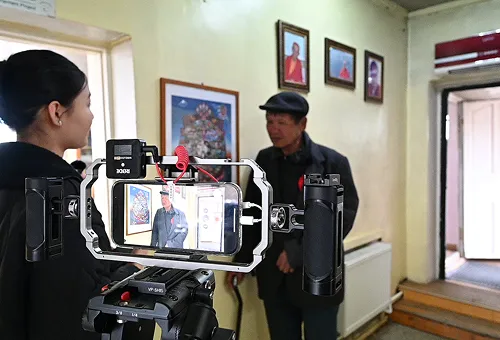
Students behind the scenes holding interviews with community members from the soup kitchen and community classroom

As one student, Victor, explains: “Instead of coming just to make a film to help, I realised we were also there to listen to the community. Filming forced us to slow down a bit, ask better questions, and truly understand what matters to them.” 

Stronger Community Partnerships

The process reframed relationships with partners such as Dolma Ling. What began as a mindset of “us helping them” shifted toward a deeper understanding of why partners do what they do, and how to represent that work honestly. As one student, Bilguunzaya, reflected, “Being there gave me a perspective on the world that I don’t usually get. It really broadened how I see people and situations.

As a result, the films became student-led reflections that community organisations could genuinely stand behind: Dolma Ling has used them to raise funds and increase awareness, while ISU has used them as evidence of authentic learning. 

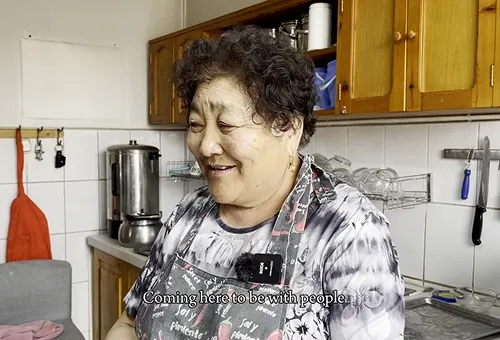
The Dolma Ling Soup Kitchen in operation

Authentic School Narratives

Because the work was student-created and grounded in real relationships, the documentaries became powerful narrative artefacts for the school — without feeling like marketing. The perspective, voice, and meaning of the stories came from the students themselves. 

ISU student Khuslen explains: “As a group, we talked a lot about what local impact looks like and how a small community organization fits into larger conversations. That process opened my eyes to how many ways a story can be delivered to the world”

Watch one of the films made about Dolma Ling, by ISU students:

This experience reinforced three key insights:

Service learning only transforms when reflection is intentional.
If students aren’t helped to pause and make sense of their experiences, the opportunity for deeper learning is missed. Reflection doesn’t just “happen” — it has to be built in, and Docathon provides a powerful way to do this.

Student storytelling creates authentic evidence of learning and values.
Student-created stories show growth, understanding, and purpose far more clearly than slogans or marketing messages ever could.

When learning is genuinely meaningful, the story takes care of itself.
When learning is real, communication follows naturally. The most credible voices are the students themselves.

Ultimately, the most powerful outcome was not the films themselves, but the shift in how students understood their place in the world. Through sustained engagement and honest storytelling, service learning moved beyond charity toward responsibility, empathy, and systems awareness. As Saranzaya, a student involved in the partnership, reflected, “It’s not their problem. It’s all of our responsibility — because it could have been any of us.” 

When schools create the conditions for students to connect deeply with their communities and represent those stories with care, slogans give way to stories that are grounded, credible, and capable of lasting impact.

Ultimately, this comes down to leadership and strategy, not marketing. 

When schools make that choice deliberately, the experiences themselves become the story.

Mark Cowlin

January 20, 2026

READ MORE

A guest blog post by Katie, student at the International School of Tanganyika, Tanzania

Stories have been part of human life since the beginning of time. Today, more than ever, we interact with them daily through the posts and videos we scroll past for hours each day. Yet we rarely stop to ask, why? Why do stories matter?

Most of us recognize it for its entertainment purpose. However, what we often miss is its underlying power that lies in how they make us feel, think, and understand others. If so much of our time is spent scrolling, consuming them - what might change if we paused to tell stories with intention?

I have lived in Tanzania for years, knowing very little about the community that I lived in. When I first encountered Docathon, I wasn’t sure what to expect. I knew I wanted to tell a story about gender inequality in Tanzania, but I did not know where to begin. I realized to begin that journey, I had to step into someone else’s world and create a story that carries authenticity, and courage. Docathon became the platform to show me how. From that single story, my goal as an artist and my reason for telling stories have been reshaped. 

Here are some of my key takeaways from my Docathon experience.

I thought I understood gender inequality in Tanzania, but listening to Leonadina’s lived experience transformed it from an issue into a human reality. Although that listening was not always comfortable, that discomfort became part of my responsibility as a storyteller to honour her truth with care and integrity. After the interview, I felt unsettled but inspired.

When stories are grounded in lived experience, audiences see not a political point, but a human reality. The most powerful stories are told with authenticity and courage; stories that share fears, truths, and the process of overcoming challenges. It is this emotional connection that engages people, moves them, and often motivates meaningful action.

Any story told with the right technique or tone can be powerful, but purposeful storytelling requires us to reach into our most honest selves and let lived experience guide the work.

For me, this became real in the editing process. I returned home with hours of footage and had to shape a woman’s life, struggles, and strength into a six-minute film. Purposeful storytelling meant deciding what to leave out as much as what to include- knowing each cut would shape how her story was understood.

So as a purposeful storyteller, every creative choice we make- how we structure a plot, shape a storyline, or present our story to others- requires introspection, thought, and emotional courage. These decisions determine whether a story simply exists on a screen or reaches beyond it and says, Listen. This matters.

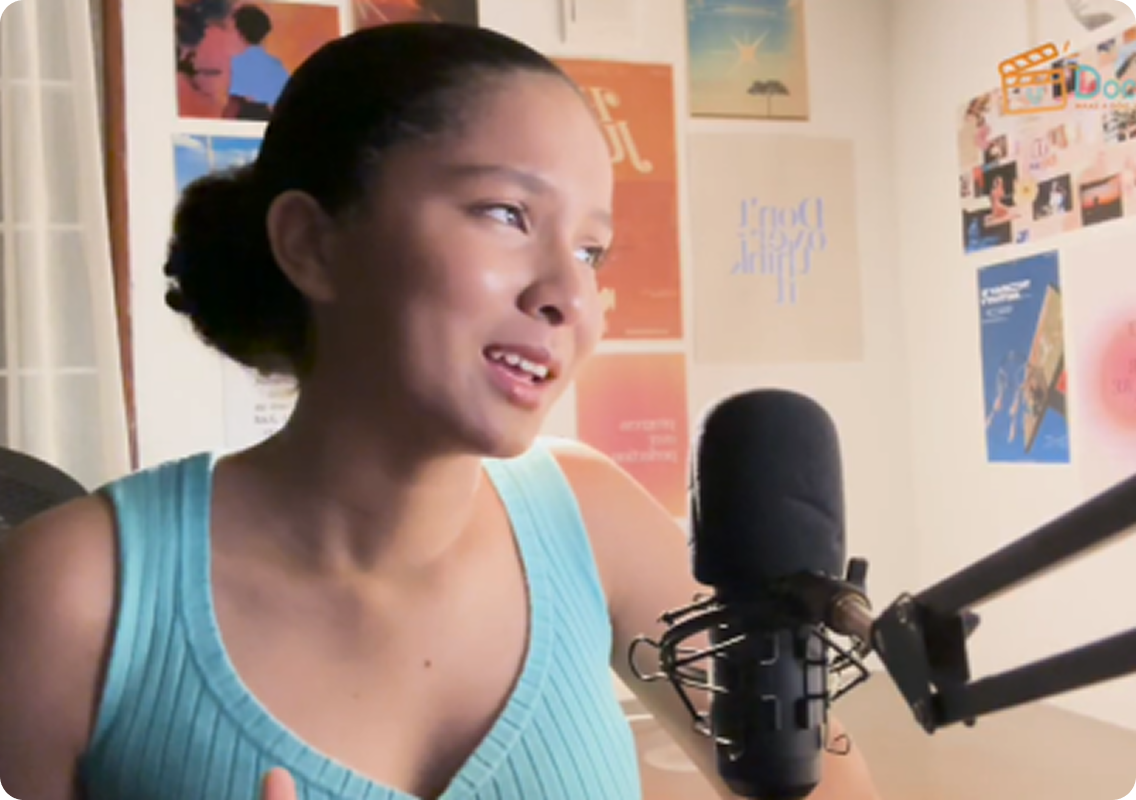
Watch Katie’s video on how she drew meaning from telling a story. 

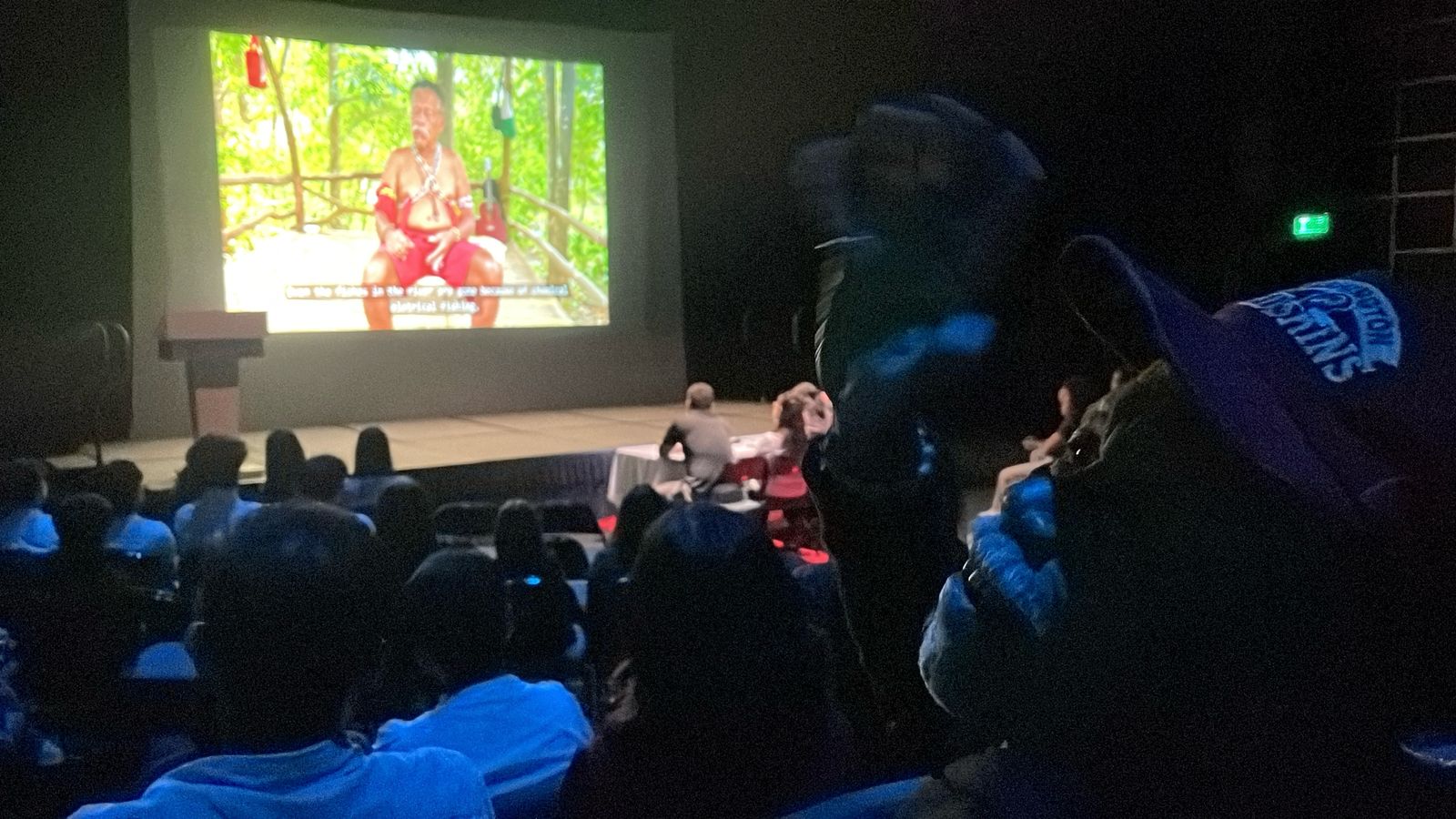
After submitting my film, I watched the Docathon screening in Kenya from my home in Tanzania. Since then, my film has been shown as far away as Monaco and the Philippines, and I have gone on to organise a Docathon after-school club and run a Docathon East Africa film festival, bringing together purposeful storytellers from across the world!

My film was shared with students, educators, and communities around the world, sparking conversations around the world on female empowerment.

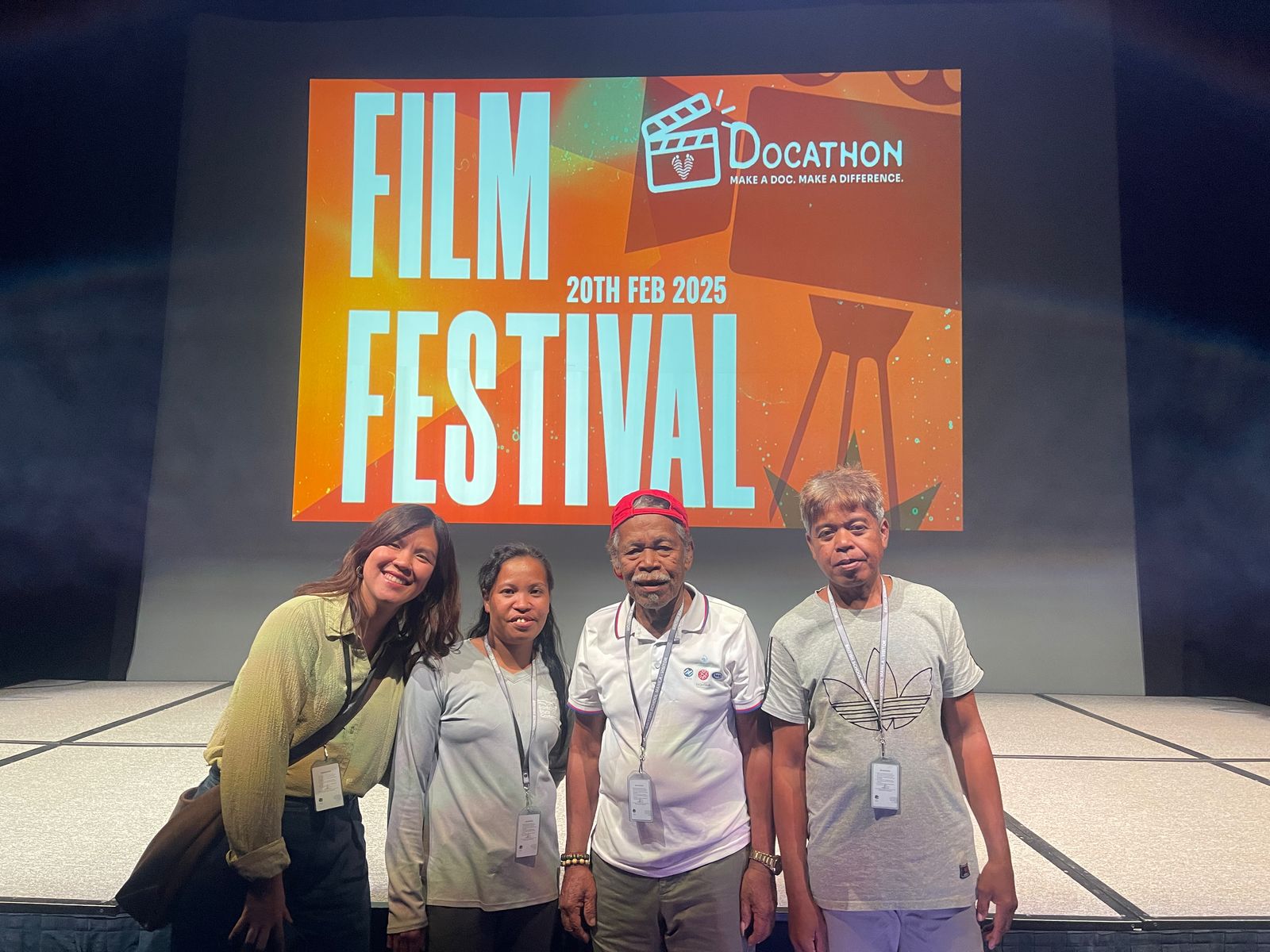
Behind the scenes of Katie and the team of students, hosting Docathon Africa 2025

I was only 17, and I never knew I was capable of telling stories that could make such a difference.This was when I realised that my art intersects with advocacy, and that my voice could make a difference. 

Through Docathon, storytelling is not just a tool for creativity. It is a tool for action.

Final thoughts:

When us students are engaged to tell our stories, we begin to see ourselves not just as learners, but as contributors. In my case, I gained confidence, agency, and a sense of responsibility to respond to the world around me with imagination and curiosity.

So here are some questions worth considering:

  • What happens when learning goes beyond assignments and asks students to take responsibility?

  • Are students working for grades, or for something that matters to them?

  • How do we treat student voice: as something to control, or something to amplify?

I believe that when we empower youth to tell meaningful stories, we are not only teaching them to communicate. We are teaching them to imagine, empathise, and lead- and to create a more connected and compassionate world.

Katie Medina

January 15, 2026

READ MORE
OUR PARTNERS
We have partnered with over 50 leading schools, universities, corporations and non-profit organisations to create and share impactful stories with the world.
Our partners include
Get In Touch