.svg)
When Schools Move from Slogans to Stories

Mark Cowlin
March 25, 2026
The Strategic Challenge
Visit the website of most international schools and you’ll see familiar phrases: holistic education, global citizenship, community engagement. It's easy to include phrases like this in mission statements, but bringing those concepts into reality for a school and having global citizenship or community engagement become a real part of a student's experience is a much bigger challenge.
Genuine values were already at the core of IS Ulaanbataar's strong programmes. We focused on strengthening how those values were expressed and experienced — by families, faculty, and community partners — through student learning itself.
At ISU, I wear two hats — one in service learning and the other in admissions, marketing and community experience — roles that are typically treated as separate.
When I first encountered Docathon, it prompted us to ask a simple but important question that could help bring these two worlds together:
Our Context at IS Ulaanbaatar
Community engagement sits at the heart of our IB Action and Community Outreach programmes. Students regularly partner with local organisations, including long-standing work with the Dolma Ling Community Centre and its Soup Kitchen project.
From the outset, we were clear about one thing: we wanted to help students slow down and engage more thoughtfully with the people and situations they encountered.
That desire to deepen reflection is what led us to integrate Docathon.
The Intervention: Docathon × Service Learning
Rather than adding filmmaking as an extra activity, documentary storytelling was embedded directly into service learning.
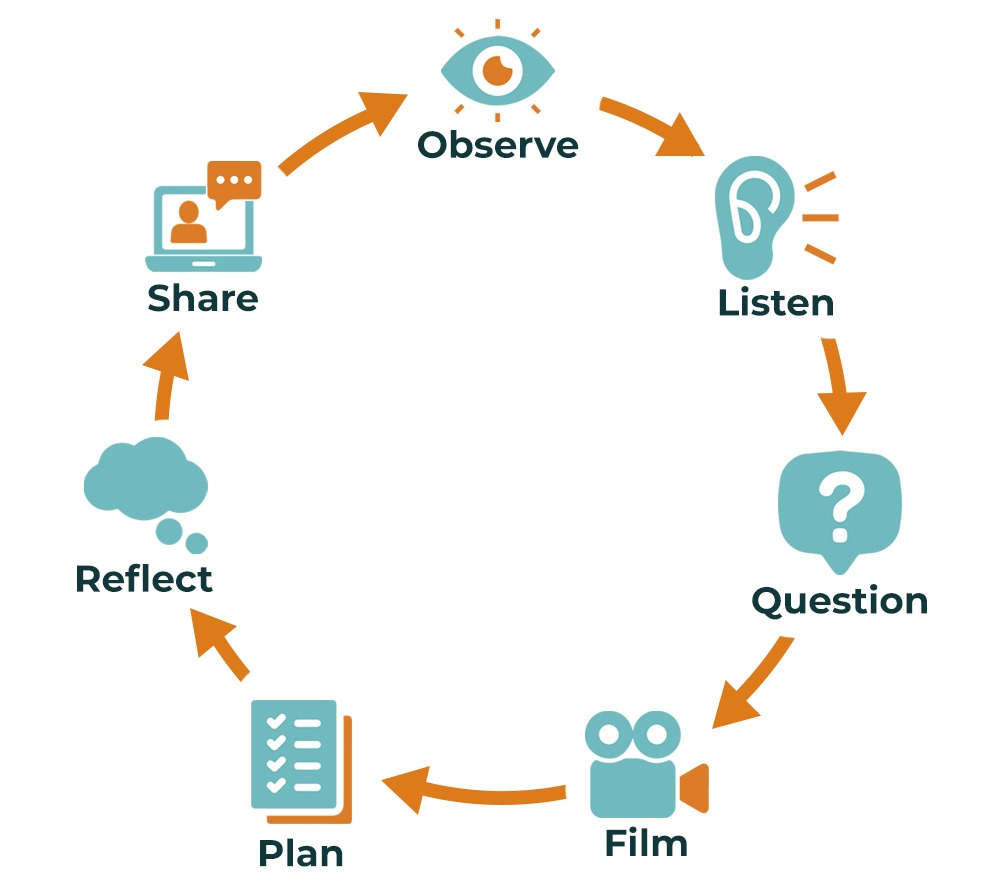
The impact was immediate. Conversations shifted from what students were doing to what they were learning — and to the people they were working with.
Importantly, this wasn’t about producing promotional content. The focus was on ethical representation, empathy, and narrative purpose — telling stories responsibly and with respect for our community partners.
Here are some of the changes I observed at our school:
Deeper Student Learning
Students were required to investigate, to pay attention and to reflect while turning their stories into short films - they could not remain passive. They had to decide what mattered, confront assumptions, and explain why their story was important. As teachers, we observed stronger listening skills, deeper questioning, and greater confidence in how students articulated their learning.
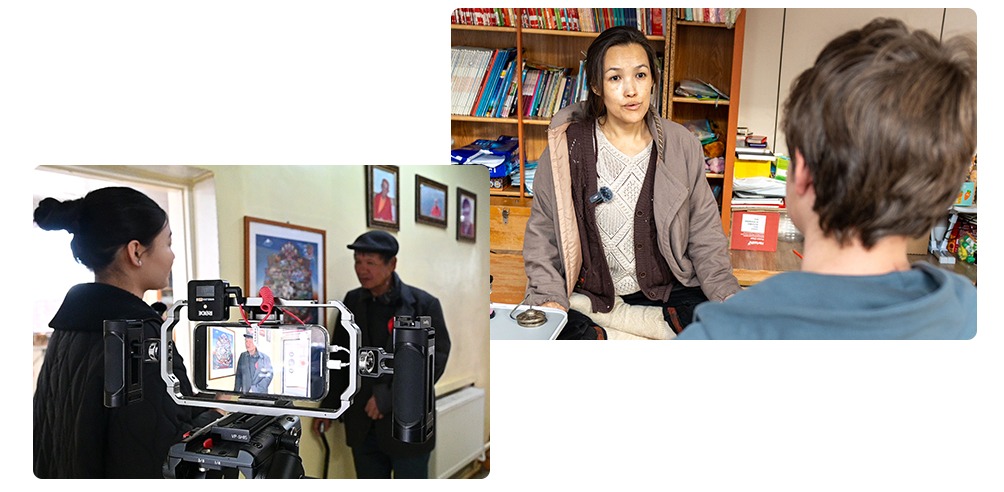
Students behind the scenes holding interviews with community members from the soup kitchen and community classroom
As one student, Victor, explains: “Instead of coming just to make a film to help, I realised we were also there to listen to the community. Filming forced us to slow down a bit, ask better questions, and truly understand what matters to them.”
Stronger Community Partnerships
The process reframed relationships with partners such as Dolma Ling. What began as a mindset of “us helping them” shifted toward a deeper understanding of why partners do what they do, and how to represent that work honestly. As one student, Bilguunzaya, reflected, “Being there gave me a perspective on the world that I don’t usually get. It really broadened how I see people and situations.”
As a result, the films became student-led reflections that community organisations could genuinely stand behind: Dolma Ling has used them to raise funds and increase awareness, while ISU has used them as evidence of authentic learning.
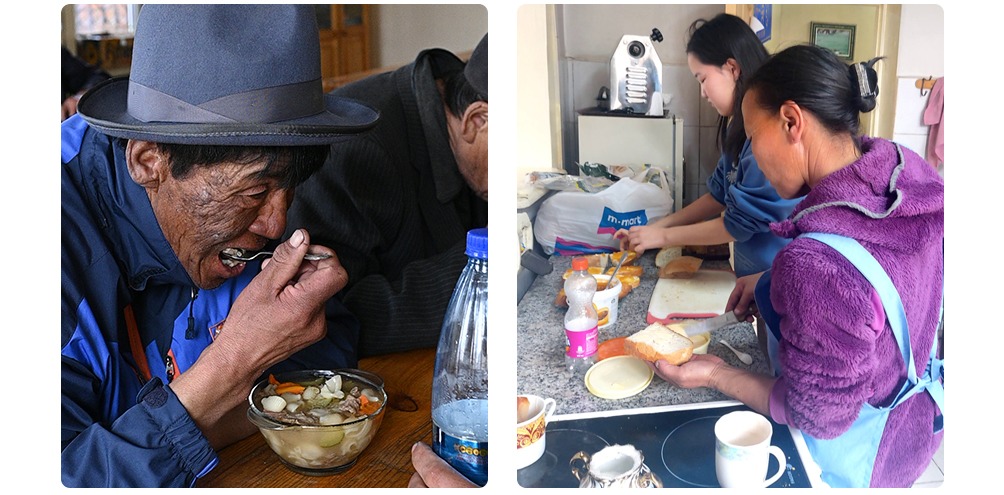
The Dolma Ling Soup Kitchen in operation
Authentic School Narratives
Because the work was student-created and grounded in real relationships, the documentaries became powerful narrative artefacts for the school — without feeling like marketing. The perspective, voice, and meaning of the stories came from the students themselves.
ISU student Khuslen explains: “As a group, we talked a lot about what local impact looks like and how a small community organization fits into larger conversations. That process opened my eyes to how many ways a story can be delivered to the world”
Watch one of the films made about Dolma Ling, by ISU students:
This experience reinforced three key insights:
Service learning only transforms when reflection is intentional.
If students aren’t helped to pause and make sense of their experiences, the opportunity for deeper learning is missed. Reflection doesn’t just “happen” — it has to be built in, and Docathon provides a powerful way to do this.
Student storytelling creates authentic evidence of learning and values.
Student-created stories show growth, understanding, and purpose far more clearly than slogans or marketing messages ever could.
When learning is genuinely meaningful, the story takes care of itself.
When learning is real, communication follows naturally. The most credible voices are the students themselves.
Ultimately, the most powerful outcome was not the films themselves, but the shift in how students understood their place in the world. Through sustained engagement and honest storytelling, service learning moved beyond charity toward responsibility, empathy, and systems awareness. As Saranzaya, a student involved in the partnership, reflected, “It’s not their problem. It’s all of our responsibility — because it could have been any of us.”
When schools create the conditions for students to connect deeply with their communities and represent those stories with care, slogans give way to stories that are grounded, credible, and capable of lasting impact.
Ultimately, this comes down to leadership and strategy, not marketing.
When schools make that choice deliberately, the experiences themselves become the story.