Explore Stories That Matter
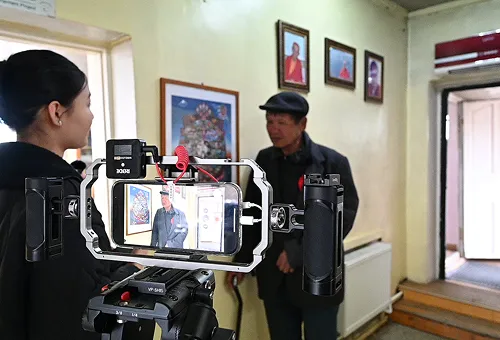
Student Films
BEYOND LIMITATIONS
A GIRL WITH A DREAM IS ON FIRE
Light of hope
RAINDROP
Budapest Bike Mafia
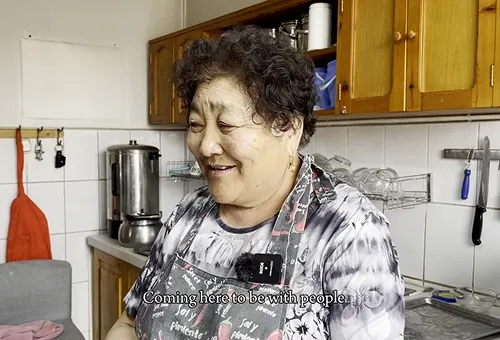
Dolma Ling Soup Kitchen
Kazakhstan
Student Voices
school stories
Connecting High School English with the Real World
30 students | Grades 11–12

Bringing Service & Sustainability Week to Life
200+ students | Grades 7–9
.png)
From Classroom to Changemaker
80 students, Grade 10
.png)
A Regional Showcase of Student Stories
10+ European Schools In collaboration with the Changemaker Conference
.png)
Ready to dig deeper into how Docathon can work in your school or classroom?
EXPLORE THE DOCATHON DISCOVERY HUBMAD Stories
BLOG


While writing business reports on a 1 billion USD investment fund from the state of Qatar into the Philippines back in 2012, I found myself immersed in the bustling city life of Manila. The glitz and glamour, however, couldn't mask the nagging sense that something was amiss. Much of the colossal investment seemed to be funneled into casinos and large-scale projects, seemingly benefiting only a select few. The more I delved into this world, the less it made sense. How much of this could I turn a blind eye to? The breaking point came, and I made the life-altering decision to leave my job.

What followed was a transformative 12 months spent delving into the heart of communities through Gawad Kalinga Community Development Foundation across the Philippines. The contrast between the corporate world and the grassroots communities was stark, yet the stories of struggle and hope resonated deeply. These were narratives that, while not yet making a global impact, were undeniably purposeful. The decision to step away from the corporate hustle into the real stories of the Philippines was drastic, but it sparked a revelation. This journey ignited a passion for connecting with narratives of hope and transformation, leading to the birth of MAD (Make A Difference) Courses.

In an era where values alignment is a driving force behind career choices, our aim is to bridge the gap between companies and meaningful impact. In the fast-paced world of today, job changes are more frequent than ever. Many attribute this shift to a misalignment with their company's values. According to the 2023 Net Positive Employee Barometer, nearly half of employees in the UK and US express a willingness to resign if their personal values don't align with those of their company. This sentiment is not limited to seasoned professionals; the 2023 Gen Z and Millennial Survey by Deloitte reveals that 39% of Gen Z and 34% of Millennials globally have actively turned down job offers from employers whose values do not resonate with their own.

For those who choose to stay, there's a danger of "quiet quitting" – a slow disengagement from their roles. MAD strives to offer an alternative path, where employees can find purpose and connection within their corporate environment. While not everyone can embark on a year-long immersion like I did, MAD envisions a world where employees can engage with stories of change, resilience, and hope. By amplifying the voices of communities globally, we aim to empower companies to not only engage their workforce but also make a tangible difference.

Join us at MAD as we navigate the intersection of corporate values and genuine impact. Our solution involves connecting companies to the work and mission of local community organizations using interactive video technology, creating a choose-your-own-adventure-style learning experience. This innovative approach serves as a training and engagement tool for employees, offering a unique way to align values with impactful action. Let's make 2024 a year of purpose, connection, and transformation.
Suji DeHart
January 29, 2024

Here’s our reflection: if accrediting bodies do not specifically include definitions and benchmarks for global citizenship education, can we reasonably expect schools to support GCE? (ie: professional development, funding for student-led initiatives…)
- Why does accreditation matter?
According to the ACS WASC website:
- Assures a school community that the school’s purposes are appropriate and being accomplished through a viable education program — a trustworthy institution for student learning.
- Validates the integrity of the school’s program and transcripts.
- Provides a process for regularly examining programs, processes, and data around school goals and student learning through data analysis, reflection, inquiry, and dialogue.
- Builds a professional culture to support the schoolwide action plan.
- Fosters the continuous improvement of the school’s programs and operations to support student learning.
- Provides valuable insight from fellow educators visiting the school.
- What is accreditation?
“Accreditation is the act of granting credit or recognition, especially to an educational institution that maintains suitable standards.” Accreditation and Global Citizenship - A query
(https://www.vocabulary.com/dictionary/accreditation)
Recently, to understand better what schools might be asked about for accreditation in terms of service, sustainability, and global citizenship education, I went to the websites of three prominent accrediting agencies: CIS (Council of International Schools), WASC (Western Association of Schools and Colleges), and NEASC (New England Association of Schools and Colleges).
I typed "global citizenship" on the websites of these accreditation bodies. The results surprised me! Out of the three bodies researched, two of them—WASC and NEASC—yielded ZERO hits:


On CIS’s website, I found these results:

While the absence of the term "global citizenship" in the specific search results does not necessarily negate its importance within the two accreditation bodies' broader frameworks, it did prompt me to consider the depth and explicit inclusion of such essential values in the standards.

What do you think? Do you think global citizenship, sustainability education, or service learning deserve more “limelight” in the accreditation process? MAD Courses would love to hear your take.