IS Ulaanbaatar · Docathon × Service Learning

I gave students cameras and accidentally solved our school's biggest credibility problem.

Mark Cowlin · Service Learning & Admissions, ISU
IS Ulaanbaatar · Docathon × Service Learning

We said all the right things. None of it was believable.

Visit any international school website and you'll find the same phrases: holistic education, global citizenship, community engagement. ISU had strong programmes — but those values lived in mission statements, not in the experiences students actually had or the stories the school could honestly tell.

Service learning existed. Real reflection didn't. Students arrived, helped, and left — without being required to slow down, question, or articulate what any of it meant.

The Gap

Strong values on paper. No authentic evidence of those values in lived student experience.

The Risk

Without structured reflection, community work becomes a résumé line — not a formative experience.

Filming forced us to slow down a bit, ask better questions, and truly understand what matters to them.
— Victor, ISU Student
02 — The Approach

Documentary storytelling, built into service —not bolted on.

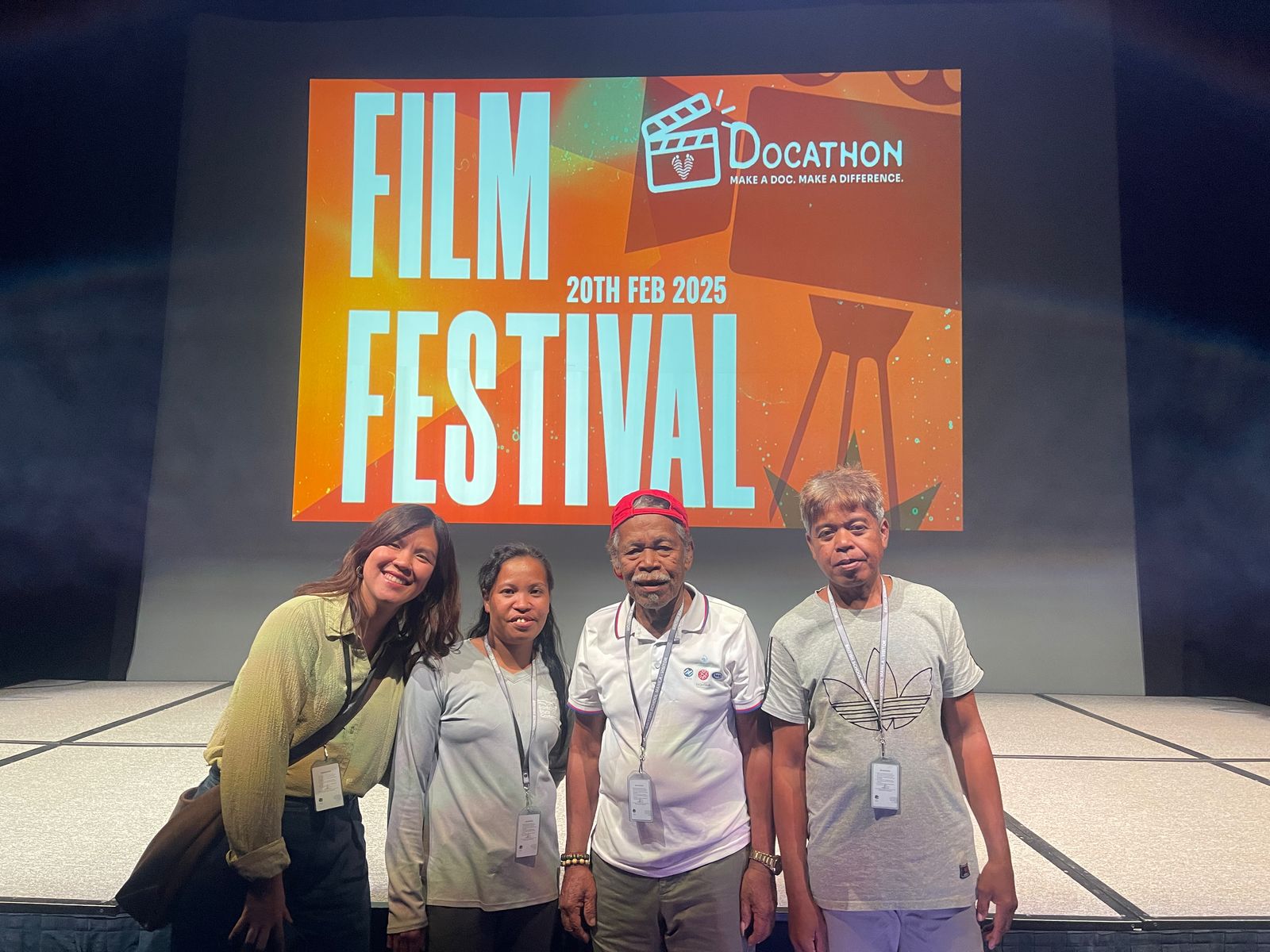
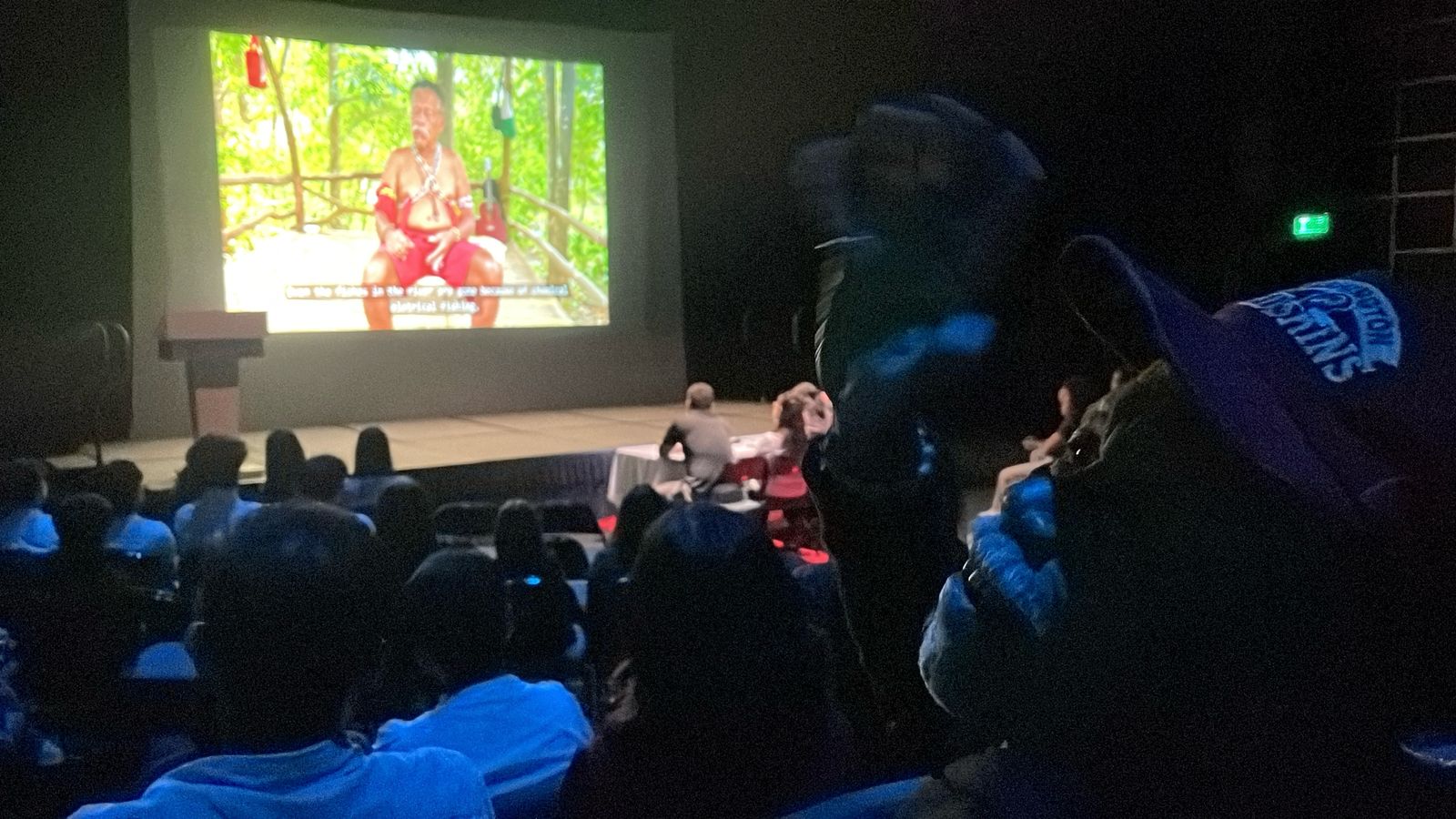
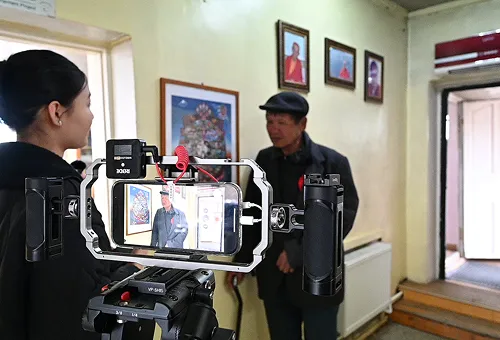
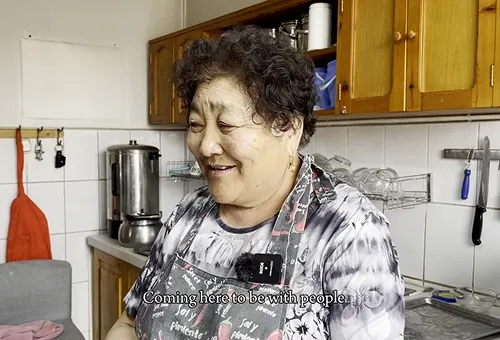
Rather than adding filmmaking as an extra activity, Docathon was embedded directly into ISU's IB servicelearning programme. Students partnered with the Dolma Ling Community Centre and its Soup Kitchen — notto produce promotional content, but to listen, observe, and represent community stories with care and ethicalintent.
1
Embed, don't add

Documentary practice replaced passive volunteering. Students were required to investigate, pay attention, and reflect — with cameras as the forcing function.

2
Ethics first

The focus was on responsible representation — empathy, narrative purpose, and respect for community partners. Not promotion. Not marketing.

3
Films as evidence

Finished films served multiple audiences: assessed by teachers as learning evidence, shared by Dolma Ling for fundraising, and used by ISU as authentic school narrative.

It's not their problem. It's all of our responsibility — because it could have been any of us.
— Saranzaya, ISU Student
03 — The Evidence

What students said. What actually changed.

"Instead of coming just to make a film to help, I realised we were also there to listen to the community. Filming forced us to slow down a bit, ask better questions, and truly understand what matters to them."
Victor
"Being there gave me a perspective on the world that I don't usually get. It really broadened how I see people and situations."
Bilguunzaya
"As a group, we talked a lot about what local impact lookslike and how a small community organization fits intolarger conversations. That process opened my eyes to howmany ways a story can be delivered to the world."
Khuslen
"It's not their problem. It's all of our responsibilitybecause it could have been any of us."
Saranzaya
3
Student films produced on first cohort
Films used by community partner for fundraising & awareness
0
Marketing briefs written — the stories emerged from real learning
Stronger listening, deeper questioning, greater confidence inhow students articulated their learning.
Dolma Ling used student films to raise funds and increasecommunity awareness — standing behind every story.
ISU gained authentic school narratives — student-created,credible, and free of marketing polish.
Watch — Student Film about Dolma Ling, by ISU Students
04 — The Invitation

Three things worth taking away.

01
Reflection doesn't just happen — build it in.

If students aren't helped to pause and make sense of their experiences, the opportunity for deeper learning is missed. Docathon provides the structure to make reflection unavoidable.

02
Student storytelling is better evidence than any brochure.

Student-created stories show growth, understanding, and purpose far more clearly than slogans or marketing messages ever could. The voice and meaning come from the students themselves.

03
When learning is real, the story takes care of itself.

This comes down to leadership and strategy, not marketing. When schools create the conditions for genuine community engagement, the narrative follows naturally.


Bring Docathon to Your School
Ready to turn your school's values into stories students actually tell?
Get in Touch

Explore Stories That Matter

Meet the 'Humans of Docathon' - students, educators, and communities telling stories that build empathy and inspire impact.

A world full of Stories

Students and teachers worldwide host Docathons, mentor peers, and inspire their communities through the power of film.

From classrooms in Tanzania to conferences in Monaco, these stories show that impactful change can start anywhere.

Student Spotlight

Student Spotlight

See how students develop confidence, voice, and leadership by telling stories that matter—earning recognised credentials along the way
After taking part in one of the very first Docathons, Katie was inspired to bring a Docathon event to her own school—giving students the opportunity to tell powerful stories about their communities and share them with peers across East Africa and beyond.

✅ Led the planning and delivery of a hosted Docathon event
✅ Ran a Docathon After-School Activity club to support student filmmakers
✅ Earned two leadership credentials.
READ MORE ABOUT KATIE'S STORY

Student Films

Watch  other remarkable Docathon submissions from around the world

BEYOND LIMITATIONS

Original film by Julianne from Foundation University in the Philippines.

A GIRL WITH A DREAM IS ON FIRE

Original film by Katie from International School of Tanganyika in Tanzania.

Light of hope

Original film by Year 5 students from British School Manila in the Philippines.

RAINDROP

Original film by Ana, Eli, Henna, Kalin, and Kiaan from Shanghai Community International School in China.

 Budapest Bike Mafia

A film by CAS student David

Dolma Ling Soup Kitchen

International School of Ulaanbatar,
Kazakhstan

Student Voices

"I got to connect, empathise, laugh and make new friends. Thank you Docathon for the opportunity!" Katie, Tanzania
This is some text inside of a div block.

Heading

This is some text inside of a div block.
"Taking part in Docathon opened my mind and changed my perspective on how I should treat life", Student,
This is some text inside of a div block.

Heading

This is some text inside of a div block.
"At a certain point, making my film became less of a school project, and more of a call to action", Student, British School Manila, Philippines.
This is some text inside of a div block.

Heading

This is some text inside of a div block.
"I used to be shy. Now I’ve told a story that reached three continents.” — Student, Philippines
This is some text inside of a div block.

Heading

This is some text inside of a div block.

school stories

When Schools Move From Slogans to Stories

Discover how to connect learning and marketing at your school

Student-created stories show growth, understanding, and purpose far more clearly than slogans or marketing messages ever could.
Mark Cowlin, Service Learning & Admissions, IS Ulaanbaatar
Learn More

Bringing Service & Sustainability Week to Life

200+ students | Grades 7–9

“The documentary process makes sure students listen deeply… It puts community voices front and centre.”
Michael Guinness, Service & Sustainability Lead, British School Manila
Learn More

From Classroom to Changemaker

80 students, Grade 10

“Docathon aligned well with our curriculum and gave students a public platform to share and celebrate their work.”
Jay Goodman, Changemaker Teacher, International School Nido de Aguilas, Chile.  
Learn More

A Regional Showcase of Student Stories

10+ European Schools In collaboration with the Changemaker Conference

“Storytelling is one of our greatest community assets and Docathon elevates the stories of local communities to the global stage. “
Dom Verwey, G6–12 Service Learning Coordinator & DP Core Educator, American International School of Budapest
Learn More

Ready to dig deeper into how Docathon can work in your school or classroom?

EXPLORE THE DOCATHON DISCOVERY HUB

MAD Stories

Why storytelling matters—and what students, educators, and the communities behind the stories are teaching us about learning, empathy, and impact.

BLOG

While writing business reports on a 1 billion USD investment fund from the state of Qatar into the Philippines back in 2012, I found myself immersed in the bustling city life of Manila. The glitz and glamour, however, couldn't mask the nagging sense that something was amiss. Much of the colossal investment seemed to be funneled into casinos and large-scale projects, seemingly benefiting only a select few. The more I delved into this world, the less it made sense. How much of this could I turn a blind eye to? The breaking point came, and I made the life-altering decision to leave my job.

What followed was a transformative 12 months spent delving into the heart of communities through Gawad Kalinga Community Development Foundation across the Philippines. The contrast between the corporate world and the grassroots communities was stark, yet the stories of struggle and hope resonated deeply. These were narratives that, while not yet making a global impact, were undeniably purposeful. The decision to step away from the corporate hustle into the real stories of the Philippines was drastic, but it sparked a revelation. This journey ignited a passion for connecting with narratives of hope and transformation, leading to the birth of MAD (Make A Difference) Courses.

In an era where values alignment is a driving force behind career choices, our aim is to bridge the gap between companies and meaningful impact. In the fast-paced world of today, job changes are more frequent than ever. Many attribute this shift to a misalignment with their company's values. According to the 2023 Net Positive Employee Barometer, nearly half of employees in the UK and US express a willingness to resign if their personal values don't align with those of their company. This sentiment is not limited to seasoned professionals; the 2023 Gen Z and Millennial Survey by Deloitte reveals that 39% of Gen Z and 34% of Millennials globally have actively turned down job offers from employers whose values do not resonate with their own.

For those who choose to stay, there's a danger of "quiet quitting" – a slow disengagement from their roles. MAD strives to offer an alternative path, where employees can find purpose and connection within their corporate environment. While not everyone can embark on a year-long immersion like I did, MAD envisions a world where employees can engage with stories of change, resilience, and hope. By amplifying the voices of communities globally, we aim to empower companies to not only engage their workforce but also make a tangible difference.

Join us at MAD as we navigate the intersection of corporate values and genuine impact. Our solution involves connecting companies to the work and mission of local community organizations using interactive video technology, creating a choose-your-own-adventure-style learning experience. This innovative approach serves as a training and engagement tool for employees, offering a unique way to align values with impactful action. Let's make 2024 a year of purpose, connection, and transformation.

Suji DeHart

January 29, 2024

READ MORE

Here’s our reflection: if accrediting bodies do not specifically include definitions and benchmarks for global citizenship education, can we reasonably expect schools to support GCE? (ie: professional development, funding for student-led initiatives…)

  1. Why does accreditation matter?

According to the ACS WASC website:

  • Assures a school community that the school’s purposes are appropriate and being accomplished through a viable education program  — a trustworthy institution for student learning.
  • Validates the integrity of the school’s program and transcripts.
  • Provides a process for regularly examining programs, processes, and data around school goals and student learning through data analysis, reflection, inquiry, and dialogue.
  • Builds a professional culture to support the schoolwide action plan.
  • Fosters the continuous improvement of the school’s programs and operations to support student learning.
  • Provides valuable insight from fellow educators visiting the school.
  1. What is accreditation?

“Accreditation is the act of granting credit or recognition, especially to an educational institution that maintains suitable standards.” Accreditation and Global Citizenship - A query

(https://www.vocabulary.com/dictionary/accreditation)

Recently, to understand better what schools might be asked about for accreditation in terms of service, sustainability, and global citizenship education, I went to the websites of three prominent accrediting agencies: CIS (Council of International Schools), WASC (Western Association of Schools and Colleges), and NEASC (New England Association of Schools and Colleges).

I typed "global citizenship" on the websites of these accreditation bodies. The results surprised me!  Out of the three bodies researched, two of them—WASC and NEASC—yielded ZERO hits:

On CIS’s website, I found these results:

504 results were found relating to "Global Citizenship" on CIS' website

While the absence of the term "global citizenship" in the specific search results does not necessarily negate its importance within the two accreditation bodies' broader frameworks, it did prompt me to consider the depth and explicit inclusion of such essential values in the standards.

What do you think? Do you think global citizenship, sustainability education, or service learning deserve more “limelight” in the accreditation process?  MAD Courses would love to hear your take.

Tom Graham

January 29, 2024

READ MORE
OUR PARTNERS
We have partnered with over 50 leading schools, universities, corporations and non-profit organisations to create and share impactful stories with the world.
Our partners include
Get In Touch