I gave students cameras and accidentally solved our school's biggest credibility problem.
Mark Cowlin · Service Learning & Admissions, ISU
IS Ulaanbaatar · Docathon × Service Learning
We said all the right things. None of it was believable.
Visit any international school website and you'll find the same phrases: holistic education, global citizenship, community engagement. ISU had strong programmes — but those values lived in mission statements, not in the experiences students actually had or the stories the school could honestly tell.
Service learning existed. Real reflection didn't. Students arrived, helped, and left — without being required to slow down, question, or articulate what any of it meant.
The Gap
Strong values on paper. No authentic evidence of those values in lived student experience.
The Risk
Without structured reflection, community work becomes a résumé line — not a formative experience.
Filming forced us to slow down a bit, ask better questions, and truly understand what matters to them.
— Victor, ISU Student
02 — The Approach
Documentary storytelling, built into service —not bolted on.
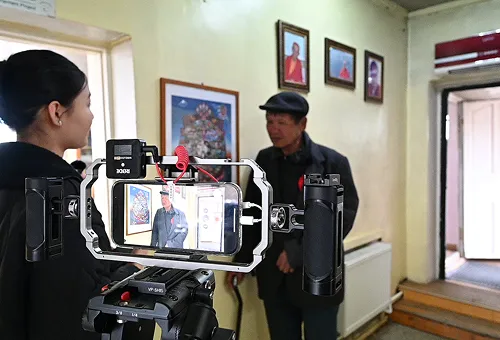
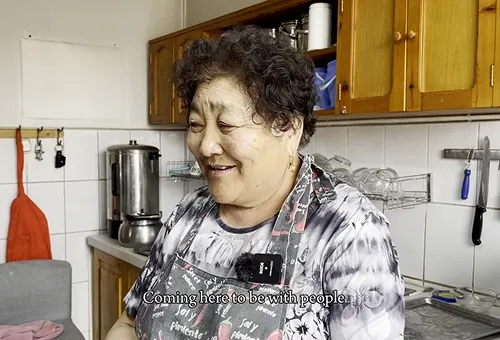
Rather than adding filmmaking as an extra activity, Docathon was embedded directly into ISU's IB servicelearning programme. Students partnered with the Dolma Ling Community Centre and its Soup Kitchen — notto produce promotional content, but to listen, observe, and represent community stories with care and ethicalintent.
1
Embed, don't add
Documentary practice replaced passive volunteering. Students were required to investigate, pay attention, and reflect — with cameras as the forcing function.
2
Ethics first
The focus was on responsible representation — empathy, narrative purpose, and respect for community partners. Not promotion. Not marketing.
3
Films as evidence
Finished films served multiple audiences: assessed by teachers as learning evidence, shared by Dolma Ling for fundraising, and used by ISU as authentic school narrative.
It's not their problem. It's all of our responsibility — because it could have been any of us.
— Saranzaya, ISU Student
03 — The Evidence
What students said. What actually changed.
"Instead of coming just to make a film to help, I realised we were also there to listen to the community. Filming forced us to slow down a bit, ask better questions, and truly understand what matters to them."
Victor
"Being there gave me a perspective on the world that I don't usually get. It really broadened how I see people and situations."
Bilguunzaya
"As a group, we talked a lot about what local impact lookslike and how a small community organization fits intolarger conversations. That process opened my eyes to howmany ways a story can be delivered to the world."
Khuslen
"It's not their problem. It's all of our responsibility —because it could have been any of us."
Saranzaya
3
Student films produced on first cohort
2×
Films used by community partner for fundraising & awareness
0
Marketing briefs written — the stories emerged from real learning
Stronger listening, deeper questioning, greater confidence inhow students articulated their learning.
Dolma Ling used student films to raise funds and increasecommunity awareness — standing behind every story.
ISU gained authentic school narratives — student-created,credible, and free of marketing polish.
Watch — Student Film about Dolma Ling, by ISU Students
04 — The Invitation
Three things worth taking away.
01
Reflection doesn't just happen — build it in.
If students aren't helped to pause and make sense of their experiences, the opportunity for deeper learning is missed. Docathon provides the structure to make reflection unavoidable.
02
Student storytelling is better evidence than any brochure.
Student-created stories show growth, understanding, and purpose far more clearly than slogans or marketing messages ever could. The voice and meaning come from the students themselves.
03
When learning is real, the story takes care of itself.
This comes down to leadership and strategy, not marketing. When schools create the conditions for genuine community engagement, the narrative follows naturally.
Bring Docathon to Your School
Ready to turn your school's values into stories students actually tell?
How Docathon is transforming service learning through the power of storytelling
Michael Guinness, former Service & Sustainability Coordinator at The British School Manila
“
Docathon really generates a listening experience at the core of embedding students in communities.
Michael Guinness, former Service & Sustainability Coordinator at The British School Manila
The Question
What happens when service learning stays on the surface?
Many schools run service programmes that are well-intentioned but transactional. Students arrive with solutions before they've heard the story. Communities are "helped" without ever really being understood — and the experience fades quickly.
The Question
Listen first. Film second.
Docathon encourages a subtle yet powerful change in how students approach service learning. Instead of arriving with answers, students arrive with questions, and time.
“
The Docathon idea is that it gives a mechanism for hearing a story and giving somebody the space to feel heard and listened to.
Michael
Traditional model
Identify problem
↓
Design solution
↓
"Help"
→
Docathon model
Listen to story
↓
Understand lived experience
↓
Reflect
↓
Respond with humility
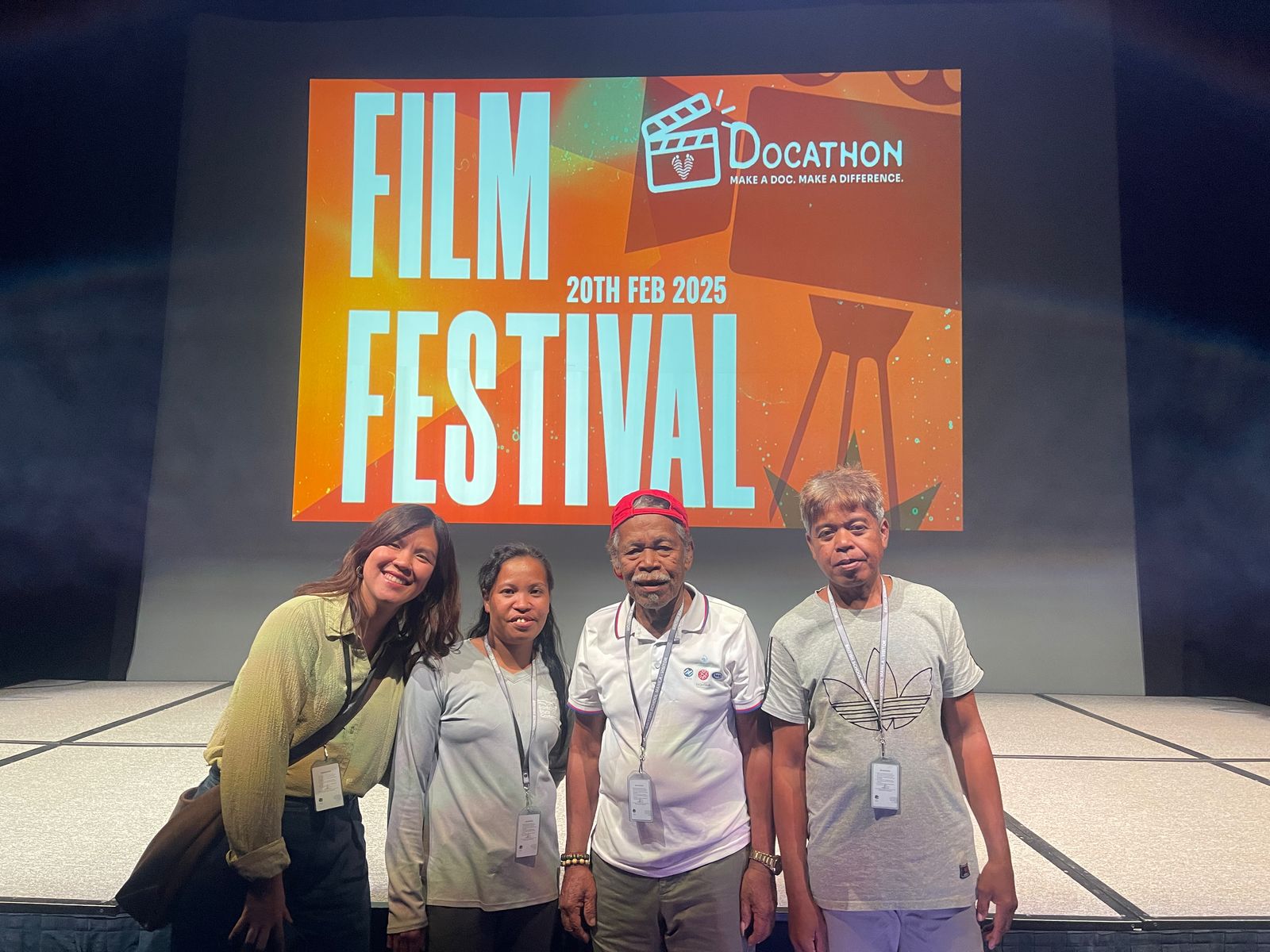
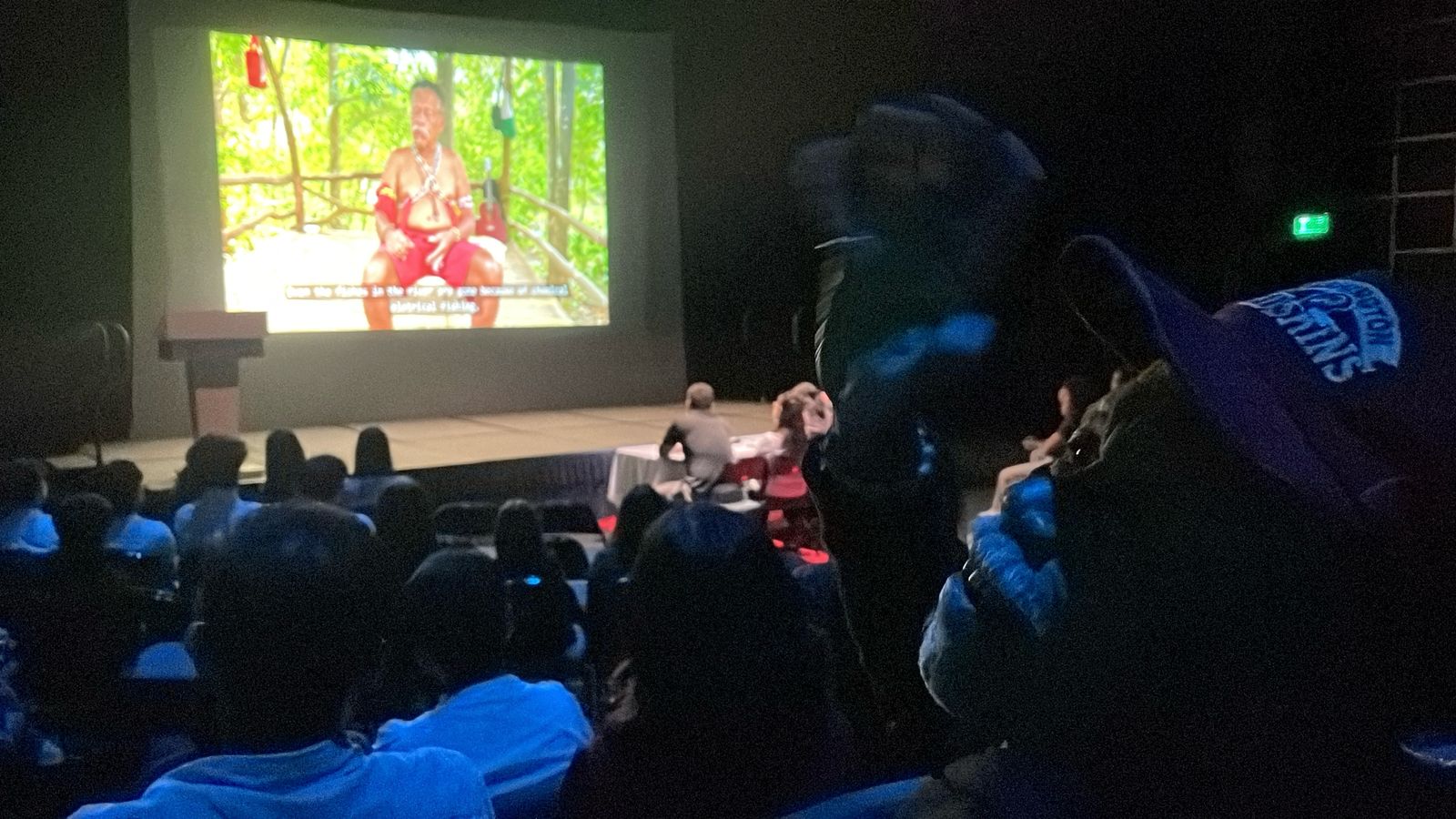
The films were later screened at 'Docathons' across grade levels and at International Evening, extending their impact beyond the classroom.
The Impact
Students, communities, and partnerships transformed
Through purposeful filmmaking, students begin to see community engagement as more than volunteer work or a checklist of tasks. It encourages them to build genuine connections, understand people's daily lives, and listen to stories that leave a lasting impact.
K
Krishaa
BSM Student
"I understood the importance of listening rather than acting… walking alongside the community instead of trying to fix things."
R
Riley
BSM Student
"Every person deserves the chance to thrive, regardless of where they're born."
The community perspective
The NGO partnership
A
Aera Landicho
Upskills Scholar
"There's no discrimination. You can see how much they love what they're doing for the community and their genuineness in helping."
J
Jannen Montiba
OIC for Education, Upskills Foundation
"It has been a decade since BSM helped us, and they never stop showing their compassion and empathy for the community."
Want to know how BSM made it happen?
See how they embedded Docathon across multiple grade levels here.
After taking part in one of the very first Docathons, Katie was inspired to bring a Docathon event to her own school—giving students the opportunity to tell powerful stories about their communities and share them with peers across East Africa and beyond.
✅ Led the planning and delivery of a hosted Docathon event ✅ Ran a Docathon After-School Activity club to support student filmmakers ✅ Earned two leadership credentials.
Why storytelling matters—and what students, educators, and the communities behind the stories are teaching us about learning, empathy, and impact.
BLOG
Case study - A 5 years meaningful partnership between MAD (Make A Difference) Courses and British School Manila (BSM) - exploring how merging the strengths of a forward thinking international school and an impactful social enterprise can #makeadifference
Service, Sustainability, Global citizenship - when we ask schools about their approach to these timely topics, they all have different answers. Most international schools set this as a priority although, for a variety of reasons, some are able to ‘walk the talk’ more than others. In this post, we’d like to share with you the story of our work with the British School Manila (BSM), whose purpose-driven leadership team have paved the way for a truly meaningful and innovative partnership. Hopefully this story will give your school more ideas on ways to engage both educators and students in sustainability and help #makeadifference.
Our collaboration with BSM began in a more conventional mode - as an external 3rd party service trip provider for the school. And yet Martin van der Linde (Head of School), had other ideas: What if BSM might bring a social enterprise such as MAD to work within the school? Martin’s brief to the MAD team (we are paraphrasing!): Help us to forge closer connections between the school, its students and a wide array of NGOs and social enterprises and, in so doing, help integrate sustainability within the curriculum.
The outcome has been the creation of a robust program for Global Citizenship Education, based around 3 pillars:
Community Outreach and Service Learning:
“Working with MAD has allowed us to really increase the quality of the opportunities that we offer our students. MAD has built an amazing web of connections and links between a whole variety of communities and environmental groups.” Michael Guinness, Whole School Global Citizenship Coordinator at BSM.
A dynamic partnership begins with dynamic individuals. Representing MAD is our co-founder, Raf Dionisio, who is now part of the British School Manila campus, collaborating closely with their Service and Sustainability coordinators and teachers across all levels.
That being said, Raf knows he wouldn’t get very far without a committed colleague at the school: “To create real, meaningful change in Service and Sustainability, you need support from staff within the school who share that common purpose. Fortunately, Michael is a true visionary himself, and we’ve been able to develop an amazing working relationship right from the get-go,” Raf explains.
For MAD Week 2022, we invited Bryan of Bambike Ecotours to share about his projects and give free bikes rides on campus.
Other classes learned about degrading soil health around the world and created their own compost using things they would have at home. (MAD Week 2022)
So what ‘action’ might this all translate into? One highlight is our large-scale initiative called "Make A Difference Week", which happens annually. This week blends online learning (interactive adventures) with engaging activities and excursions all in line with the Sustainable Development Goals, service, and leadership building. Meanwhile, this initiative has been supporting CAS (Community, Activity, and Service) programs and SAA (Service as Action) for younger kids. The objective is to engage, encourage and empower students when engaging with their local community partners.
2. Curriculum Integration:
“(Thanks to this partnership) we always have opportunities for a meaningful real world transfer of learning across our curriculum.” Michael Guinness, Whole School Global Citizenship Coordinator at BSM.
Quite surprisingly, despite sustainability being one of the utmost concerns in the minds of students, Sustainability or Global Citizenship continues to be seen as beyond curriculum. Some educators might see this as a daunting task:
How might curriculum integration of the SDGs become more engaging, relevant and accessible, so that students across the school - not just those fortunate enough to go on a trip - are able to discover the world outside their regular ‘bubbles’?
The MAD team, alongside Michael Guinness and other educators at BSM, have therefore been working in tandem to integrate service and sustainability seamlessly into the curriculum across all grade levels. In particular, stories are a great way to engage students. With this in mind, MAD leverages the immersive power of interactive video adventures, bringing fun and engaging experiences that cultivate skills and insights vital for global citizenship. This way, every student in the school, regardless of which trip they go (or whether they go at all) is able to explore global issues through the unique lens of local communities.
BSM has recently been using our CMLP as preparation for their service trips with MAD Travel.
3. Community Trips/Adventures:
“The expertise of the (MAD) team works well alongside our understanding of our own context to develop learning journeys that work right for us both inside the classroom and out in the field (and often in combination)” Michael Guinness, Whole School Global Citizenship Coordinator at BSM.
Service trips remain a fundamental pillar in most schools’ Service and Sustainability missions, and with good reason: they provide students with an opportunity to connect deeply with surrounding communities, embrace nature, foster teamwork, enhance self-confidence.
Raf, Michael, and other faculty of British School Manila (BSM) explored different community partners with MAD Travel, including a turtle nesting site at the mouth of Manila Bay.
And yet, how do we ensure that students are engaged and equipped with the right tools to make the most of their experience? Again, this is where online tools can bolster real-life experiences. From this coming year, students will be given access to MAD’s ChangeMaker Launchpad, a self-guided online journey which will enable students to better analyse, understand and tackle the issues they will experience while travelling.
There is still much room for growth, but our partnership so far exemplifies the magic that happens when shared-values meet innovative education. Our shared vision of nurturing well-rounded, empathetic, and proactive global citizens is at the forefront of this partnership.
Of course, there are many other ways to engage students to become empowered changemakers, and we’d love to hear what you will be working on this year. Also, If you’d like to collaborate with us on Service & Sustainability and set up a holistic culture of global citizenship get in touch with Sophie, our head of school partnerships. You can reach her at suji@madcourses.com
In a world where experiences often define us, travel has consistently held a place of prominence. It's the captivating landscapes, the inspiring encounters with locals, and the chance to make a difference that makes travel a transformative endeavour. However, the emergence of the COVID-19 pandemic abruptly reshaped the way we connect and experience the world. As a travel company based in the Philippines, we found ourselves facing a challenge: how could we sustain the essence of travel, the very thing that brings people together, without the ability to physically journey?
At the heart of our mission lies the desire to recreate the profound encounters one might have while exploring far-flung destinations, but with a technological twist. Our response to the pandemic-induced travel restrictions has been to harness the power of interactive video technology. This innovation allows participants to curate their virtual journey, offering the freedom to choose destinations, interact with individuals, and pose thought-provoking questions - all from the comfort of their own screens.
We recently ran a program for Canva, a creative technology company, which showcased the transformative potential of this approach. Canva's employees embarked on a virtual adventure to the coastal community of Lobo, located south of Manila. The excitement of this digital journey was met with enthusiasm by employees at Canva, illustrating that the allure of travel - and the opportunity to make a difference - can still be captured even when physical travel is off the table.
Lobo Interactive Adventures
We asked Camille Armas, Social Impact Program Manager for Canva Foundation - Philippines for her thoughts.
“During our recent volunteering week at Canva Philippines, we were really pleased with MAD Courses’ Lobo Interactive Tour experience at it was a unique, fun, and new way for our employees to interact and learn about different issues that affect the Lobo community while also contributing to the community in a small way.”
Camille added that particular highlights of the experience were the ‘story flow, narrative, and the overall quality of the interactive adventure’: “We’re excited for the potential future local stories that can be shared to a broader audience in a similar way.”
Indeed, this experience highlighted a new era of possibilities. Imagine hundreds of employees from various corporations across the Philippines accessing immersive, 'transformative' learning experiences through virtual travel. The boundaries of traditional travel melt away as technology steps in to provide a carbon-neutral, cost-effective, and accessible alternative. Not only could employees partake in these experiences, but students too could venture into the world, gaining insights into global challenges, especially those concerning sustainability.
While nothing can replace the authenticity of in-person interactions, this blend of technology and wanderlust opens doors to deeper appreciation and empathy for the diverse world we inhabit. It's about fostering a connection with our planet and its inhabitants, regardless of physical presence. As we strive to minimize our carbon footprint and reduce the strain on our environment, interactive video technology emerges as a valuable tool in expanding horizons.
Lobo’s lush mangroves and marine life that you’ll get to explore in our Interactive Adventure
The virtual journey isn't simply about virtually 'going' places. It's about uncovering shared stories, witnessing pressing challenges, and recognizing the interconnectedness of our world. It's about cultivating an understanding that transcends borders, promoting empathy for fellow citizens and fostering a sense of global community. This journey through screens has the power to plant seeds of change, sparking a newfound commitment to sustainable practices and positive action.
In conclusion, the allure of travel isn't solely confined to physical exploration. Through the convergence of technology and wanderlust, we can embark on transformative journeys that transcend limitations, foster connections, and nurture empathy. While physical travel will always hold its special place, the evolution of interactive video technology presents an exciting pathway to broadening our appreciation for the world we share: not just for corporations, but for students around the world who - regardless of their background - might now have the opportunity to explore important global issues through the lens of local communities.
If you want to get a virtual trip for your classroom or colleagues, check the trailer to our latest adventure in Lobo here and reach out to suji@madcourses.com
We have partnered with over 50 leading schools, universities, corporations and non-profit organisations to create and share impactful stories with the world.










.svg)


.svg)


.png)
.png)
.png)